DTI is what lenders look at first — see yours and what it means for loan qualification.
Results are estimates for planning purposes and are not financial, medical, or professional advice.
How to Use the Debt-to-Income Ratio Calculator
Lenders use your debt-to-income ratio to judge whether you can handle another monthly payment. Our DTI calculator adds up your recurring debts, compares them to your gross income, and shows where you stand against common lending thresholds.
- Enter your gross monthly income before taxes, including salary, bonuses, and other steady income.
- List your recurring monthly debt payments: rent or mortgage, car loans, student loans, credit card minimums, and child support.
- Do not include utilities, groceries, or subscriptions, since lenders only count debt obligations.
- Calculate to see your front-end ratio (housing only) and back-end ratio (all debts), with guidance on what each means.
Debt-to-Income Ratio Calculator Formula
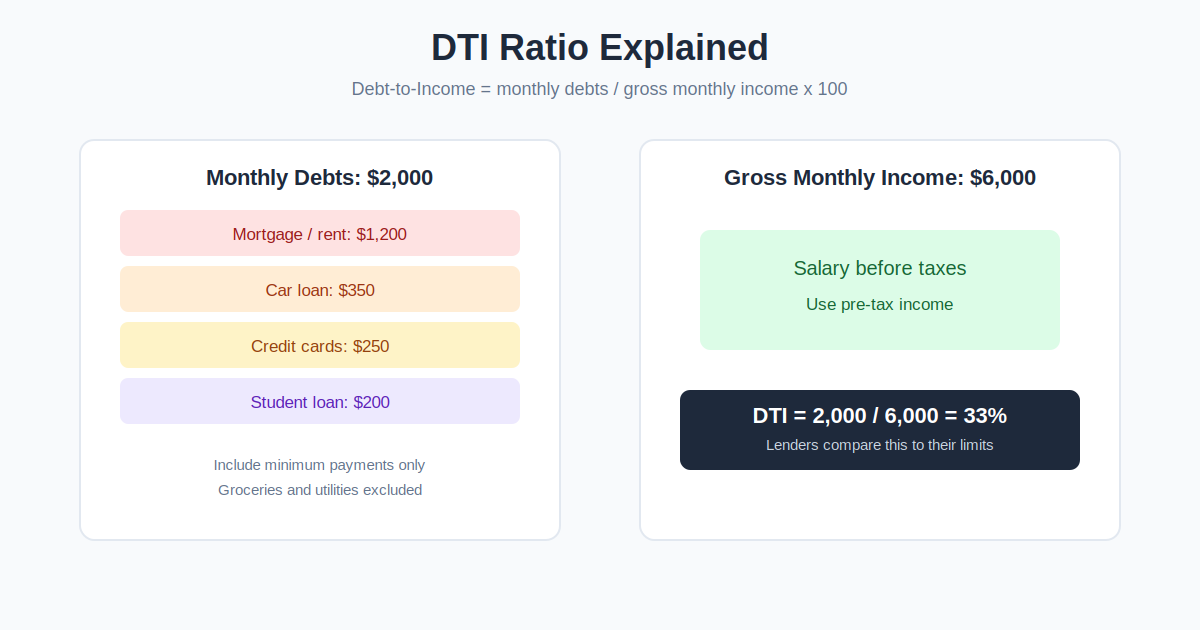
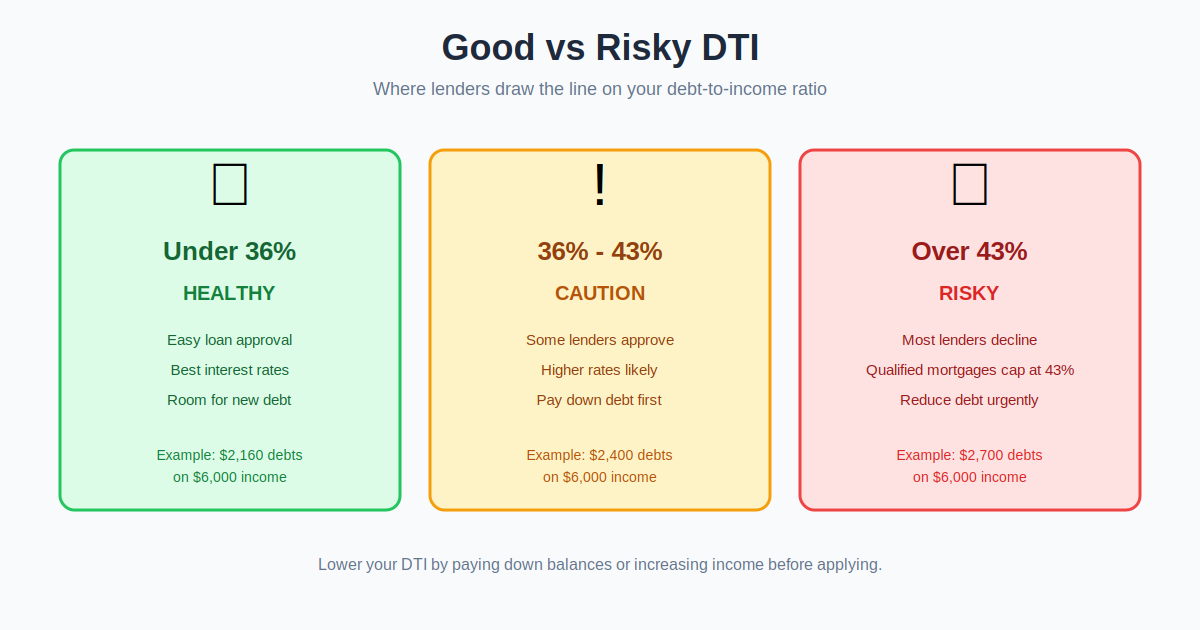
The back-end DTI ratio equals total monthly debt payments divided by gross monthly income, multiplied by 100. The front-end ratio uses only housing costs (mortgage or rent plus taxes, insurance, and HOA) divided by gross monthly income. Lenders generally want the back-end ratio at or below 43 percent for qualified mortgages, with 36 percent or less considered strong. The front-end ratio should usually stay under 28 percent.
Example Calculation
Imagine you earn 6,000 dollars per month before taxes. Your debts are a 1,400 dollar mortgage payment (including taxes and insurance), a 350 dollar car payment, 200 dollars in student loans, and 150 dollars in credit card minimums, totaling 2,100 dollars. Your back-end DTI is 2,100 divided by 6,000, or 35 percent, which most lenders view favorably. Your front-end ratio is 1,400 divided by 6,000, or 23.3 percent, comfortably under the 28 percent guideline. This borrower would likely qualify for additional credit.
Frequently Asked Questions
What is a good debt-to-income ratio?
Under 36 percent is excellent, 37 to 43 percent is acceptable to many lenders, and above 43 percent makes mortgage approval difficult. Lower is always better for your financial flexibility.
Does DTI include my living expenses?
No. Lenders count only contractual debt payments like loans, minimum card payments, rent or mortgage, and support obligations. Groceries, utilities, and streaming subscriptions do not factor in.
How can I lower my DTI ratio?
Pay down balances to cut monthly minimums, avoid new debt, refinance to lower payments, or increase income. Paying off a small loan entirely can drop your ratio quickly.
Why was I denied with a decent credit score?
Credit score measures repayment history, while DTI measures capacity. You can have great credit but still be denied if your existing payments already consume too much income.
Do lenders use gross or net income?
Gross income before taxes. Using gross standardizes the calculation, though your personal budget should always be built on take-home pay.
What DTI limits do different mortgage types allow?
Conventional qualified mortgages cap back-end DTI at about 43 percent, though automated underwriting can approve up to roughly 50 percent when you have strong credit, cash reserves, or other compensating factors. FHA loans can go up to 56.9 percent in strong cases. VA loans have no hard cap and instead check that you keep enough residual income after all payments. Staying under 36 percent gives you the widest choice of lenders and the best rates.
Related Calculators
Try our Mortgage Calculator and Debt Payoff Calculator for more financial planning tools.
Related Guides
Learn more in our detailed guide: Debt-to-Income Ratio Explained.