Order Enough to Finish the Lawn — Not Enough to Rot in the Driveway
Sod is a race against the clock. It is cut fresh at the farm, and every hour it sits rolled up in the heat shortens the life of the grass. Order too little and you are patching bare strips with leftover scraps; order too much and expensive rolls bake on the pallet while you figure out where to put them.
This free sod calculator takes the guesswork out. Measure your lawn — rectangle or circle — and it converts the area into sod rolls, pallets, and estimated weight, with a waste allowance for cutting around edges, trees, and beds. Add your farm’s pallet price and you get a cost estimate too. The built-in seed comparison helps you decide whether sod is even the right call for your project.
How this was calculated
Sod is cut fresh and should be laid the same day it arrives. Schedule delivery for a morning you can lay it, keep the soil damp beforehand, and water each section within 30 minutes of laying.
How to Use This Calculator
- Pick the lawn shape. Choose Rectangle for square and rectangular lawns, or Circle for round areas. For irregular lawns, split them into rectangles and circles, calculate each part, and add the results.
- Enter the measurements in feet. Length and width for a rectangle; the straight-across diameter for a circle. Pace it off or use a tape — most lawns are bigger than they look.
- Choose your roll size. The standard harvest roll is 2 × 5 feet (10 square feet, about 20 lb). Mini rolls (16 × 24 in) are available at some garden centers for patches and small lawns.
- Set the pallet capacity and waste allowance. A standard pallet holds about 500 square feet (50 rolls) — confirm with your farm. Use 5% waste for straight, open lawns; 10% when you are cutting around trees and beds; 15% for lots of small pieces.
- Add a pallet price (optional). Enter what your sod farm charges per pallet to see an estimated total cost for the job.
- Click Calculate Sod. You get the rolls to order, the pallets, the lawn area, and the estimated weight — plus a seed-versus-sod comparison to sanity-check your plan.
What Is Sod, Exactly?
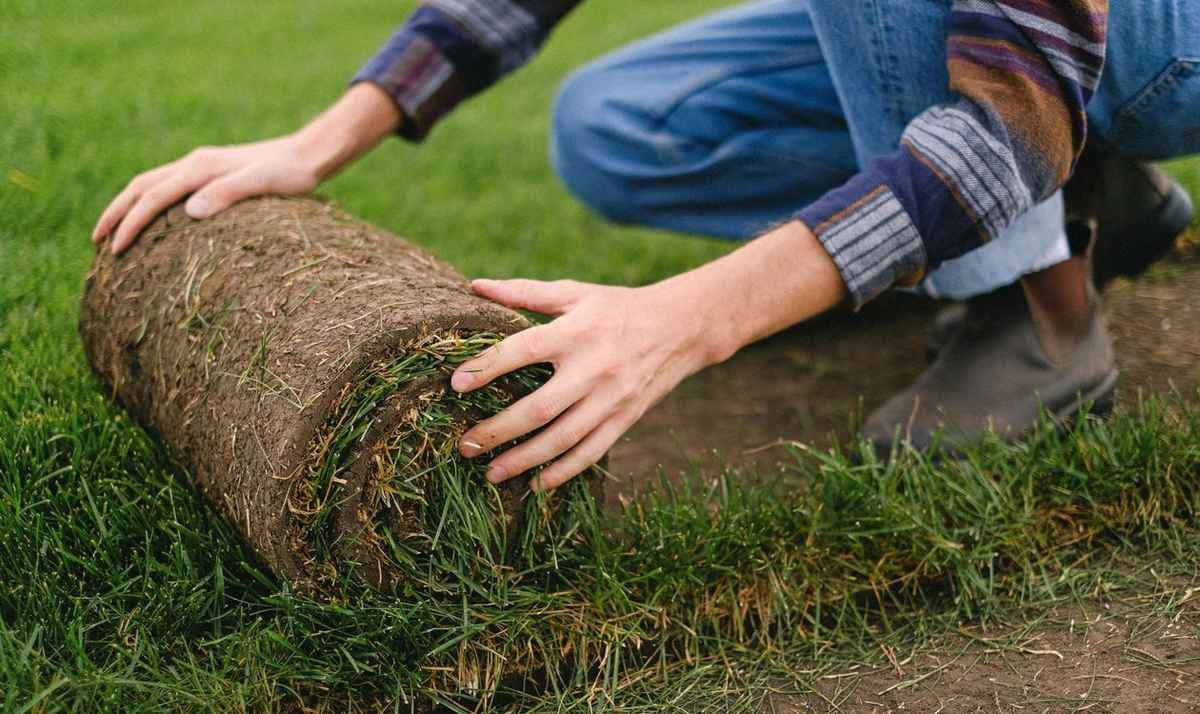
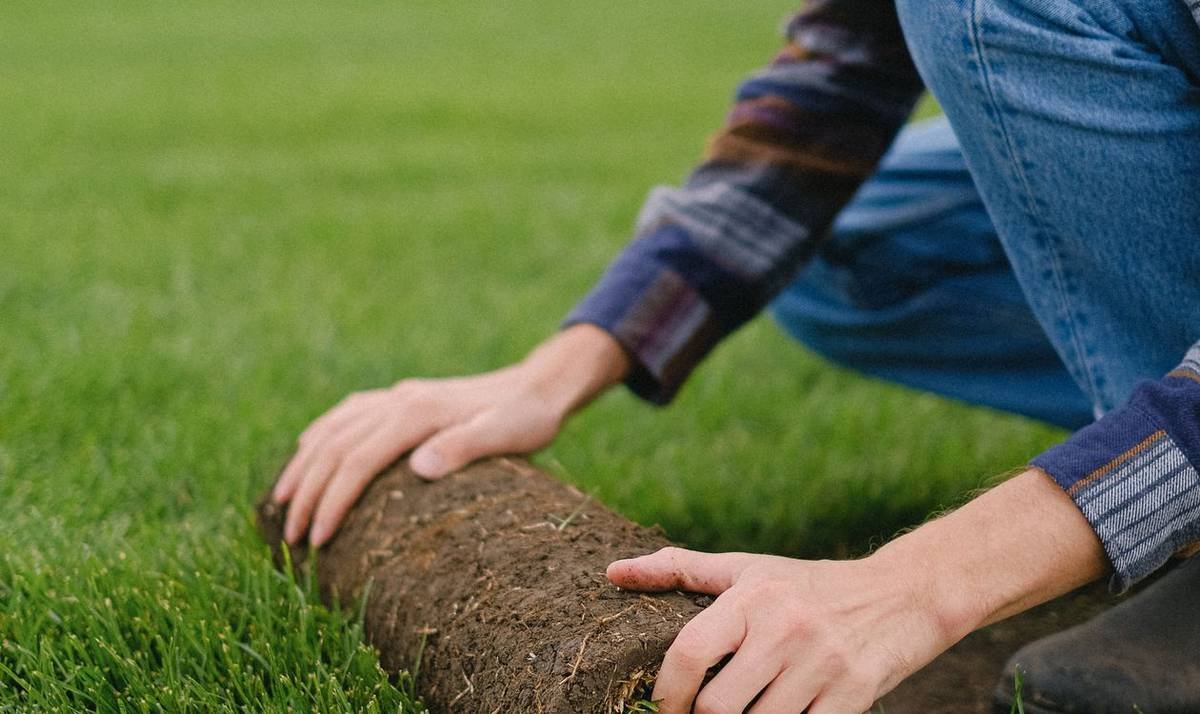
Sod — also called turf — is grass grown on a farm, then sliced off with a thin layer of soil and roots attached, rolled up, and sold ready to lay. It is an instant lawn: unroll it onto prepared soil, water it in, and you have a finished yard the same day, with roots knitting into the soil below within a couple of weeks.
The industry standard unit is the harvest roll: 2 feet wide by 5 feet long, covering 10 square feet and weighing around 20 pounds. Farms stack about 50 rolls on a pallet, so one pallet covers roughly 500 square feet (some farms load up to 600). Small orders sometimes come as mini rolls — 16 by 24 inches, under 3 square feet each — which are easier to carry but cost more per square foot.
The number that matters most is your lawn’s square footage, because everything else divides from it. A rectangular lawn is length × width; a circular one is π × (diameter ÷ 2)². Then add the waste allowance — sod around a curved bed or a tree gets trimmed, and those offcuts cannot be reused. Straight, open rectangles get 5%; anything with curves, trees, or garden beds deserves 10%; fiddly layouts with many small pieces need 15%.
The Formula (With a Worked Example)
Rolls to order = (area × (1 + waste)) ÷ roll coverage, rounded up
Pallets = (area × (1 + waste)) ÷ pallet capacity, rounded up
Worked example — a 20 ft × 30 ft lawn, standard rolls, 5% waste, 500 sq ft pallets.
- Area: 20 × 30 = 600 square feet.
- Add 5% waste: 600 × 1.05 = 630 square feet.
- Rolls: 630 ÷ 10 = 63 rolls.
- Pallets: 630 ÷ 500 = 1.26 → 2 pallets (pallets cannot be split).
- Weight: 63 rolls × 20 lb = 1,260 lb — plan for a trailer or delivery, not the trunk.
Quick Reference: Rolls and Pallets by Lawn Size
Assuming standard 10 sq ft rolls, 5% waste, and 500 sq ft pallets:
| Lawn size | Area | Rolls to order | Pallets |
|---|---|---|---|
| 20 × 20 ft | 400 sq ft | 42 | 1 |
| 20 × 30 ft | 600 sq ft | 63 | 2 |
| 30 × 40 ft | 1,200 sq ft | 126 | 3 |
| 40 × 50 ft | 2,000 sq ft | 210 | 5 |
| 50 × 80 ft | 4,000 sq ft | 420 | 9 |
Tips for Ordering and Laying Sod
- Prepare the soil before delivery day. Sod roots into the top few inches of soil — loosen it, rake it level, and dampen it. Sod laid on dry, compacted ground struggles to root.
- Schedule for a morning you can lay it all. Sod starts deteriorating within hours of harvest, faster in heat. Lay it the same day it arrives, and water each section within 30 minutes of laying.
- Stagger the seams like brickwork. Offset each row’s joints so no two seams line up — this locks the lawn together and hides the grid pattern. Butt edges tightly with no gaps or overlaps.
- Do not skimp on the waste allowance. Curves, trees, and sprinkler heads all create offcuts you cannot reuse. Running one roll short leaves a bare patch that weeds find within days.
- Roll and water immediately. A lawn roller presses the sod’s roots into the soil for good contact; then soak it deeply — the soil underneath should be moist 3–4 inches down.
- Stay off it for two weeks. Light foot traffic is fine after a few days, but keep heavy use off until the roots have knit — tug a corner gently; resistance means it is rooting.
More Construction Tools
Measuring Irregular and Round Lawns
Real lawns are rarely one clean rectangle. The fix is to break the yard into simple shapes, measure each one, and add the areas together before you order:
- Triangle: area = ½ × base × height. A triangular bed 20 ft across with a 12 ft depth covers 120 square feet — 12 rolls, or 13 rolls with the usual 5% cutting allowance.
- Circle: area = π × radius². A round lawn with a 10 ft radius covers about 314 square feet — 32 rolls, or 33 with the allowance.
- Odd shapes: sketch the yard, split it into rectangles, triangles, and part-circles, and total the pieces. Overestimate slightly on curved edges; offcuts from one row start the next, so a modest surplus rarely goes to waste.
Lay it in a staggered, brick-like pattern so seams do not line up, butt the edges tightly, and install the same day it arrives — stacked rolls heat up from the inside and can yellow within a day or two.
Frequently Asked Questions
How do I calculate how much sod I need?
Measure the lawn in square feet (length x width for a rectangle, or pi x (diameter / 2) squared for a circle), add 5% for cuts, and divide by 10 for standard rolls. A 600 square foot lawn needs 630 square feet with waste, which is 63 rolls. The calculator above does this in one step.
How many square feet does a roll of sod cover?
A standard harvest roll is 2 feet by 5 feet, covering 10 square feet and weighing about 20 pounds. Mini rolls sold at garden centers are 16 by 24 inches, covering about 2.67 square feet each.
How many square feet are on a pallet of sod?
A standard pallet holds about 50 rolls, covering roughly 500 square feet. Some farms load up to 600 square feet on a pallet, and small pallets may hold 450. Confirm the capacity with your sod farm before ordering.
How much extra sod should I order?
Add 5% for a straight, open lawn with few cuts; 10% for curves, trees, and garden beds; and 15% when the layout has many small pieces. The leftover rolls are what you patch mistakes with — sod is always rounded up, never down.
How much sod do I need for 1,000 square feet?
Order 1,100 square feet: 1,000 plus 5% for cuts is 1,050, and since farms sell whole rolls (and often whole pallets), that becomes 105 rolls, or about 2.1 pallets — so you would order 3 pallets unless your farm sells partial pallets.
Is it cheaper to seed or sod a lawn?
Seed is far cheaper — roughly 5 to 10 lb of seed per 1,000 square feet versus hundreds of dollars per pallet of sod. But seed takes 2 to 3 weeks to sprout and 2 to 3 months to fill in, needs steady watering, and fights weeds the whole time. Choose sod for instant results and erosion-prone slopes; choose seed for large lawns on a budget.
How soon must I lay sod after delivery?
The same day — ideally within a few hours. Rolled sod heats up quickly and the grass starts dying within a day, faster in hot weather. Have your soil prepared and your crew ready before the truck arrives, and water each section within 30 minutes of laying it.
How do I measure an irregular or round lawn?
Break it into simple shapes and add the areas. A triangle is ½ × base × height — 20 ft × 12 ft gives 120 square feet, about 13 rolls with the 5% cutting allowance. A circle is π × radius² — a 10 ft radius gives about 314 square feet, roughly 33 rolls with the allowance. Rectangles, triangles, and circles between them cover almost any yard shape.
How much does sod cost?
It varies too much by location for one honest number: price per square foot depends on your region, the grass variety, whether you buy by the roll or the pallet, and delivery fees, which can rival the sod itself on small orders. Get quotes from two or three local suppliers for your exact square footage from the calculator — pallet pricing is almost always cheaper per square foot than individual rolls.