Baby growth percentile calculator: estimate your baby weight percentile by age and sex. Enter months, weight, and sex for an instant approximate percentile.
Results are estimates for planning purposes and are not financial, medical, or professional advice.
How to Use the Baby Growth Percentile Calculator
A weight percentile tells you how your baby compares to other babies of the same age and sex. This calculator gives an instant estimate using simplified WHO-style reference medians, so you can sanity-check growth between checkups.
- Enter your baby age in months, from 0 to 24.
- Enter the current weight in pounds.
- Select boy or girl, since growth references differ by sex.
- Review the estimated percentile and the reference median weight.
How Percentiles Are Estimated
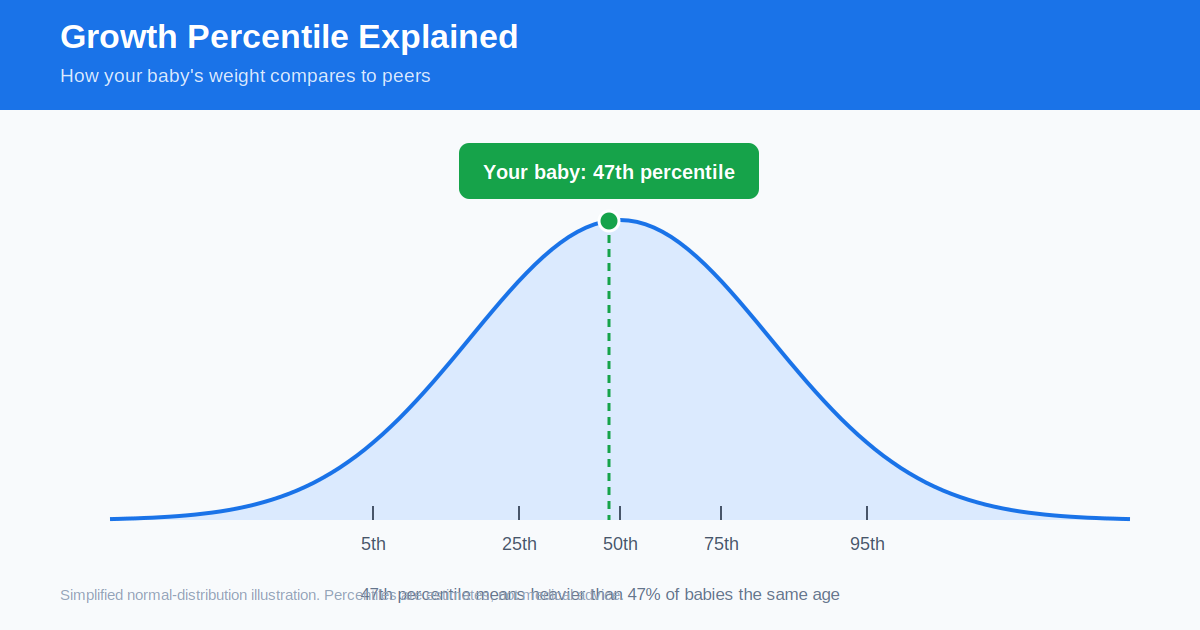
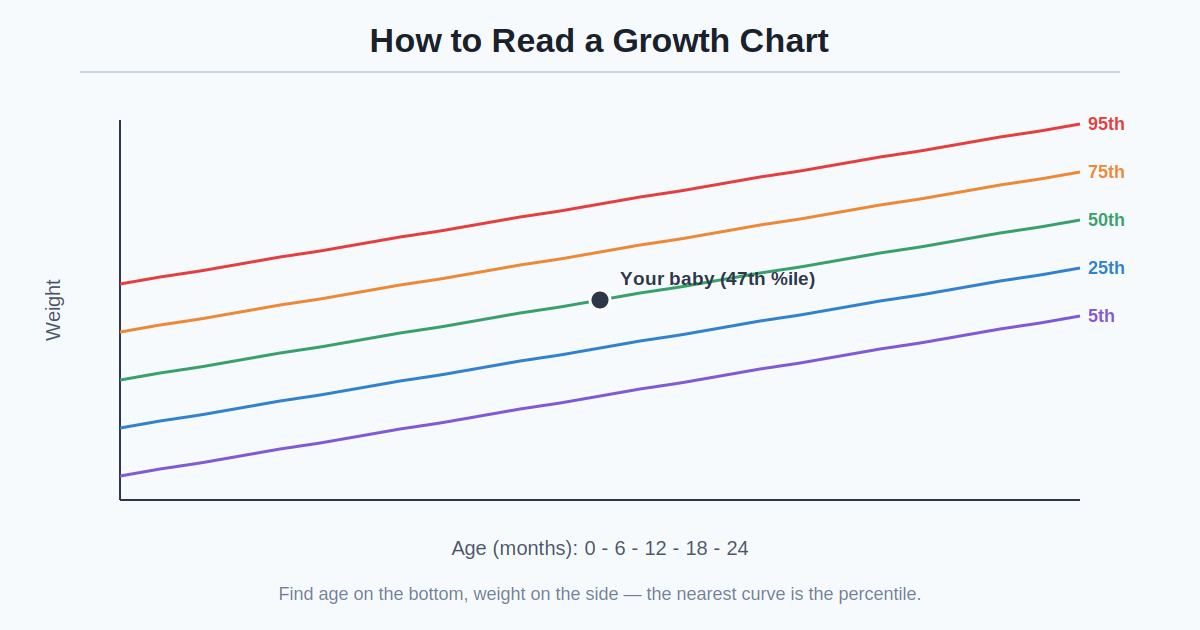
The calculator looks up the reference median weight for the age and sex, interpolating between tabulated points, then measures how far the baby is from that median in standard-deviation units: z = (weight – median) / (0.12 x median). The z-score is converted to a percentile with the normal distribution. For example, a 12-month-old boy weighing 21 lbs (9.53 kg) against a 9.6 kg median gives z near -0.06, which is about the 47th percentile, essentially average. This is an approximation, not a medical diagnosis.
Example
Noah is a 12-month-old boy weighing 21 lbs. The reference median for his age is about 21.2 lbs. His estimated percentile is about 47.4, meaning he weighs more than roughly 47 percent of boys his age. That is comfortably in the typical range, and his pediatrician will confirm the trend across visits.
What This Estimate Does and Does Not Show
This tool estimates weight-for-age percentile only. It does not measure length, head circumference, or weight-for-length, which is why pediatricians track all three at checkups. It uses your baby’s chronological age, so a premature baby will score low against full-term medians; clinicians use corrected age for preemies instead. Think of the result as a rough guide between checkups, never a growth diagnosis.
How to Weigh Your Baby for a Reliable Result
Weighing technique matters more than the formula. Use the same scale each time, weigh your baby undressed or in a dry diaper, and weigh before a feed rather than after. A dedicated baby scale beats a bathroom scale for small bodies, and logging the date with each reading turns single numbers into a visible trend.
Frequently Asked Questions
What percentile is considered normal?
Anything from about the 5th to the 95th percentile can be normal. What matters most is following a consistent curve over time, not any single measurement.
Should I worry about the 50th percentile?
No. The 50th is just the middle, not a goal. A healthy baby can track steadily at the 20th or 80th percentile for years.
Why do boys and girls differ?
Growth patterns differ by sex from birth, so WHO publishes separate charts. Using the wrong reference would shift the percentile meaninglessly.
How accurate is this estimate?
It is a simplified model for quick checks. Real WHO charts use more complex LMS parameters. Always rely on your pediatrician plotted measurements for medical decisions.
My baby dropped percentiles. Is that bad?
A small shift is common and often fine, but crossing two major percentile lines downward deserves a pediatrician visit. Do not panic over one estimate. Feeding changes, illness, and measurement variation can all cause temporary dips that resolve on their own.
Should I use corrected age if my baby was premature?
For tracking growth, yes. Clinicians subtract the weeks of prematurity from the actual age for the first two years. This calculator uses actual age, so premature babies will read low here even when they are growing well for their corrected age.
How often should I check my baby’s weight percentile?
Every few weeks is enough for a healthy baby, and always pair it with regular pediatric checkups. Weekly or daily weigh-ins catch scale noise more than real growth.
Related Calculators
Track milestones with the Age Calculator and monitor maternal health with the BMI Calculator and plan a healthy pregnancy with the Pregnancy Weight Gain Calculator.