The Short Answer: It Depends on the Material
There is no single answer to “how many yards in a ton” — because a yard measures volume and a ton measures weight, and the bridge between them is density. A ton of fluffy bark mulch fills about 2.86 cubic yards, while a ton of dense crushed stone fills only about 0.67 cubic yards. Same ton, wildly different pile.
For the materials most people order: one ton of loose gravel is about 0.71 cubic yards, one ton of dry sand about 0.74 cubic yards, and one ton of topsoil about 0.91 cubic yards. Flip the question around and the familiar figures appear: a cubic yard of gravel weighs roughly 1.4 tons, a yard of topsoil about 1.1 tons, and a yard of mulch barely a third of a ton.
This free converter works in both directions — cubic yards to tons and tons to cubic yards — for six common bulk materials, plus a custom-density option when your supplier gives you an exact figure. The quick-reference table in the results updates live from the same density data.
How this was calculated
Quick reference — cubic yards in one ton
| Material | Tons per yd³ | Yd³ per ton |
|---|
Densities are typical bulk values and vary with moisture, compaction, and stone size. Wet material can weigh noticeably more. Always confirm the per-yard weight with your supplier before ordering or paying by weight.
How to Use This Calculator
- Pick the conversion direction. Choose Yards → Tons when you know the volume (for example, from our cubic yard calculator) and want the weight, or Tons → Yards when the supplier quoted you a weight and you want to picture the pile.
- Select your material. Gravel, crushed stone, sand, topsoil, cured concrete, or mulch — each carries its own typical density. If your supplier gave you an exact figure, choose Custom density and enter it.
- Enter the amount. Type the number of cubic yards or tons, depending on the direction you picked.
- Click Convert. You get the converted value as the headline, plus pounds, cubic feet, and a full breakdown showing the exact density and calculation used.
- Check the quick-reference table. The results include a live table of all six materials showing cubic yards per ton — handy for comparing materials at a glance.
Why a Yard Does Not Equal a Fixed Number of Tons
A cubic yard is a box 3 feet on each side — pure volume. A ton is 2,000 pounds — pure weight. Whether that box weighs a little or a lot depends entirely on what is inside it: airy bark mulch is mostly air, while crushed stone packs tightly with almost no voids. Moisture changes the answer too — a yard of topsoil after heavy rain can weigh hundreds of pounds more than the same yard bone dry.
This is also why many landscape suppliers sell by the cubic yard rather than the ton: the weight of a yard swings with the seasons and the weather, but the volume is always the volume. When a supplier does sell by weight, they are really selling you a density assumption — worth confirming before a big order.
The standard densities used above are typical bulk values quoted across the industry:
| Material | Tons per cubic yard | Cubic yards per ton |
|---|---|---|
| Gravel, loose | 1.40 | 0.71 |
| Crushed stone | 1.50 | 0.67 |
| Sand, dry | 1.35 | 0.74 |
| Topsoil | 1.10 | 0.91 |
| Concrete, cured | 2.03 | 0.49 |
| Mulch / bark | 0.35 | 2.86 |
Treat these as estimating figures. Stone from different quarries, sand with different moisture content, and mulch shredded to different sizes will all deviate — for an exact conversion, get the density from your supplier and use the custom-density option.
The Formula (With a Worked Example)
Cubic yards = tons ÷ density (tons per cubic yard)
Pounds = tons × 2,000 · Cubic feet = cubic yards × 27.
Worked example — 5 cubic yards of gravel to tons.
- Density of loose gravel: 1.4 tons per cubic yard.
- Multiply: 5 × 1.4 = 7 tons.
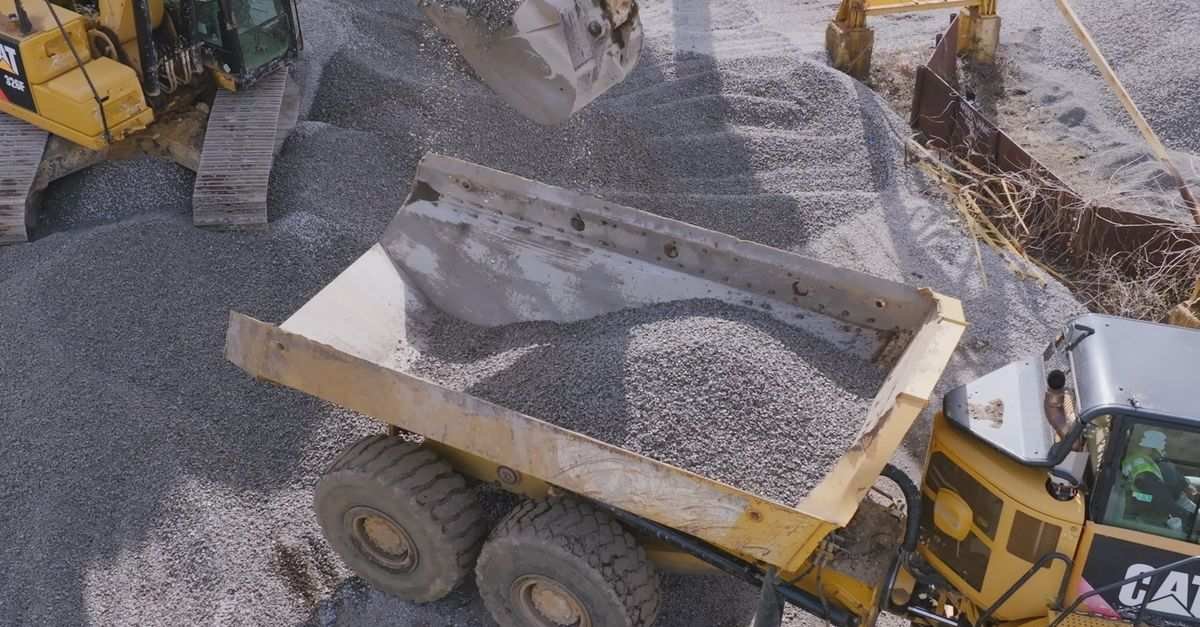
- In pounds: 7 × 2,000 = 14,000 lb — right at the capacity of a large dump truck.
Worked example — 10 tons of topsoil to yards.
- Density of topsoil: 1.1 tons per cubic yard.
- Divide: 10 ÷ 1.1 = 9.09 cubic yards.
- In cubic feet: 9.09 × 27 = 245.5 ft³.
Tips for Ordering by Yards or Tons
- Order in the unit the supplier sells in. Converting is for planning; the invoice follows their unit. If they sell by the ton, convert your yards to tons before calling so you are comparing real prices.
- Ask for the density. A thirty-second question — “how many tons per yard is your crushed stone?” — replaces every estimate on this page with a fact. Then use the custom-density option.
- Remember moisture. Rain-soaked topsoil and sand can run 10–20% heavier than dry figures. If it has been raining, add a margin — or wait a day.
- Watch the truck’s weight limit, not just its bed. Most pickups hit their payload rating (often 1,000–1,500 lb) long before the bed looks full of stone. Two yards of gravel at 2.8 tons needs a real delivery truck.
- Do not confuse square yards with cubic yards. Fabric and sod sell by the square yard (area); bulk material sells by the cubic yard (volume). Mixing them up inflates an order by a factor of the depth.
- Start from volume when planning. If you only know the project dimensions, run them through a cubic yard calculator first, then convert the result to tons here.
Quick Conversion Table: 1, 5, and 10 Cubic Yards in Tons
Most supplier quotes land on round volumes. Using the same densities as the table above, here are the conversions people ask for most:
| Material | 1 yd³ | 5 yd³ | 10 yd³ |
|---|---|---|---|
| Gravel, loose | 1.4 tons | 7 tons | 14 tons |
| Crushed stone | 1.5 tons | 7.5 tons | 15 tons |
| Sand, dry | 1.35 tons | 6.75 tons | 13.5 tons |
| Topsoil | 1.1 tons | 5.5 tons | 11 tons |
| Mulch / bark | 0.35 tons | 1.75 tons | 3.5 tons |
| Concrete, cured | 2.03 tons | 10.15 tons | 20.3 tons |
The 10-yard column shows why delivery trucks quote both numbers: 10 yards of mulch is a light 3.5-ton load, while 10 yards of cured concrete rubble at 20.3 tons exceeds what many dump trucks may legally carry.
Related Construction Tools
Frequently Asked Questions
How many yards are in a ton?
It depends on the material’s density. One ton of loose gravel is about 0.71 cubic yards, one ton of topsoil about 0.91 cubic yards, one ton of dry sand about 0.74 cubic yards, and one ton of bark mulch about 2.86 cubic yards. Divide 1 by the material’s tons-per-yard density to get the exact figure.
How do I convert cubic yards to tons?
Multiply the cubic yards by the material’s density in tons per cubic yard. For example, 5 cubic yards of gravel at 1.4 tons per yard equals 7 tons. To go the other way, divide tons by the density.
How many tons is a yard of gravel?
About 1.4 tons (roughly 2,800 lb) for loose gravel. Dense crushed stone runs closer to 1.5 tons per yard.
How many yards is a ton of topsoil?
About 0.91 cubic yards — just under one full yard. In the other direction, one cubic yard of topsoil weighs roughly 1.1 tons (about 2,200 lb).
How many yards is a ton of mulch?
About 2.86 cubic yards, because bark mulch is light and bulky at roughly 0.35 tons per yard. Mulch is the one material where volume, not weight, fills the truck first.
Is a yard the same as a ton?
No. A cubic yard measures volume (27 cubic feet) and a ton measures weight (2,000 pounds). They only convert through the material’s density, which is why a yard of concrete weighs nearly six times as much as a yard of mulch.
Does wet material weigh more per yard?
Yes. Water fills the air voids between particles, so rain-soaked soil, sand, or gravel can weigh 10–20% more per yard than the same material dry. Confirm weight-based pricing with your supplier after wet weather.
How many tons can a dump truck carry?
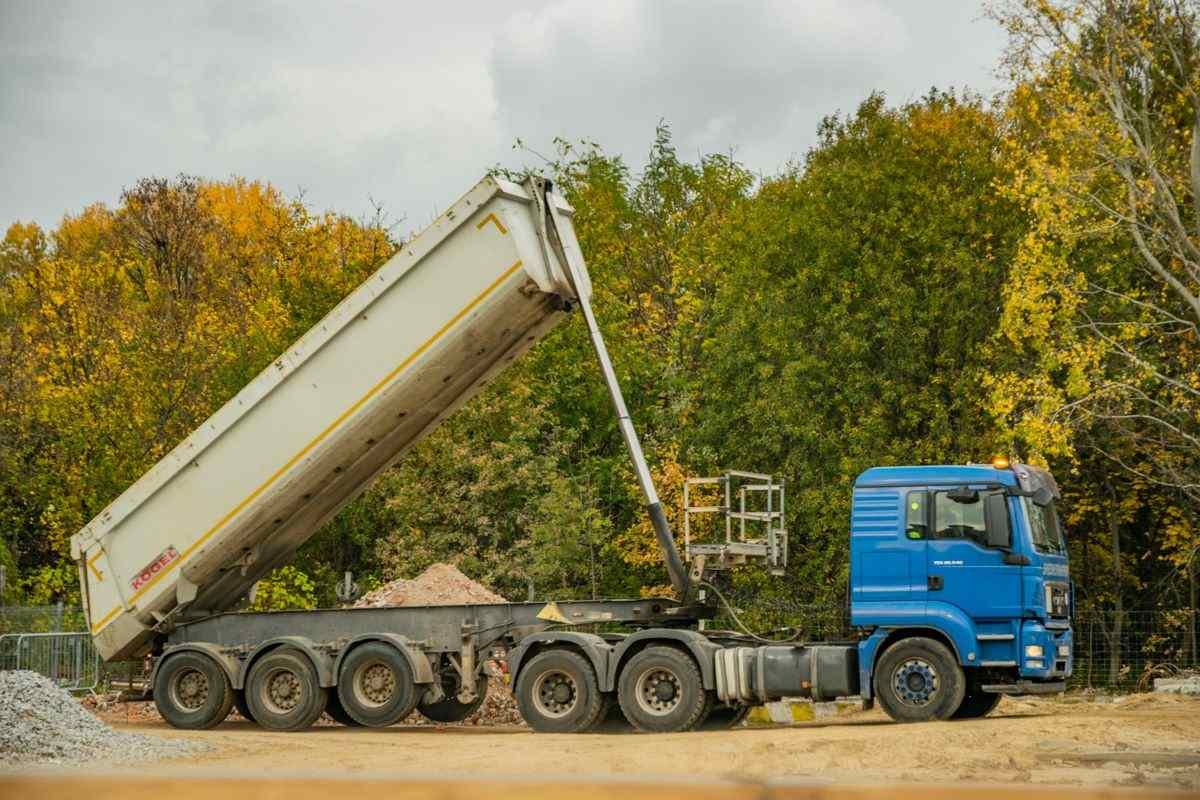
Most full-size dump trucks hold 10–16 cubic yards and are rated around 14 tons of payload. Because dense materials hit the weight limit before the bed is full, a “full” load of crushed stone is often fewer yards than a full load of mulch.
How many tons is 10 yards of gravel?
14 tons. Loose gravel runs about 1.4 tons per cubic yard, so 10 × 1.4 = 14 tons (28,000 lb). Dense crushed stone at 1.5 tons per yard would be 15 tons instead. If your supplier weighs the load, expect the ticket to land within a few percent of these figures, higher after rain.
How many cubic yards fit in a dump truck?
A small single-axle dump truck carries about 5-6 cubic yards; the common tandem-axle dump truck carries 10-14 cubic yards. Volume is rarely the real limit for heavy materials, though — 10 yards of crushed stone weighs about 15 tons, which is at or over many trucks’ legal payload, so stone loads are often volume-reduced.