Free blood pressure analyzer: enter systolic and diastolic readings to get your AHA category, from Normal to Hypertensive Crisis, with clear next steps.
Results are estimates for planning purposes and are not financial, medical, or professional advice.
How to Use the Blood Pressure Analyzer
Enter your latest blood pressure reading to find out which American Heart Association category it falls into and what to do next.
- Enter your systolic pressure (the top number).
- Enter your diastolic pressure (the bottom number).
- Press calculate to see your AHA category instantly.
- Read the advice and share the result with your doctor if needed.
Blood Pressure Categories
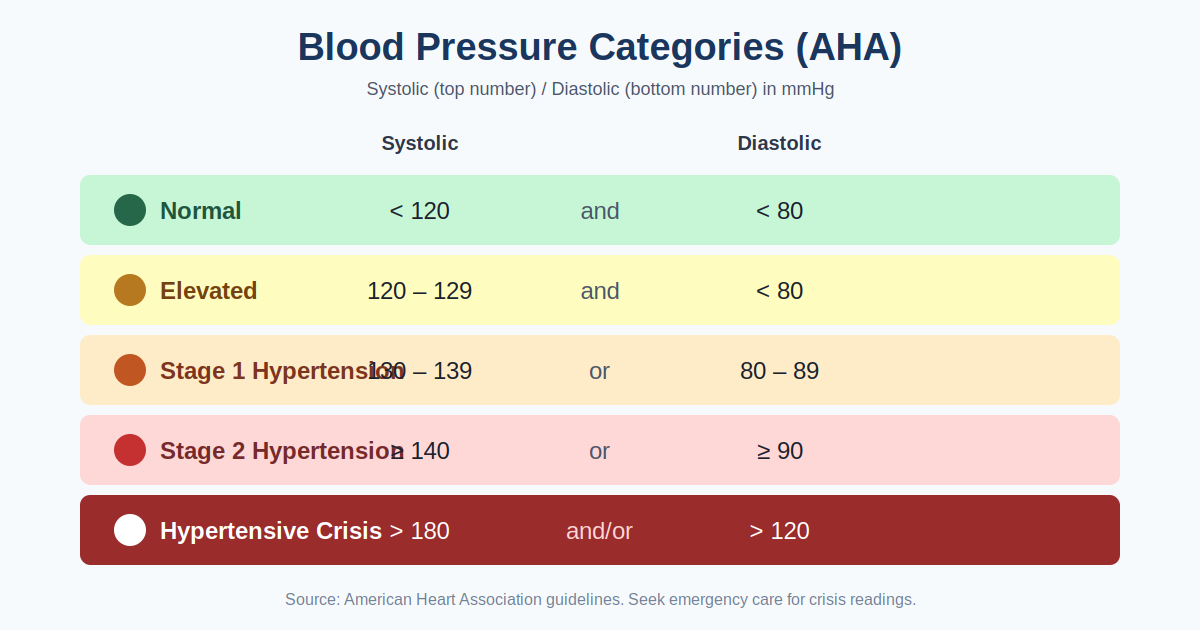
The AHA defines five categories. Normal is below 120 over 80. Elevated is 120 to 129 with diastolic below 80. Stage 1 hypertension is 130 to 139 systolic or 80 to 89 diastolic. Stage 2 is 140 or higher systolic or 90 or higher diastolic. A hypertensive crisis is above 180 systolic or above 120 diastolic and needs emergency care. When systolic and diastolic fall in different categories, the higher one applies.
Here is that split rule in action. A reading of 119 over 85 looks fine on the systolic side, which is normal, but the diastolic 85 sits in the Stage 1 range of 80 to 89. The higher category applies, so this reading is Stage 1 hypertension. This is why both numbers always matter together.
Example
A reading of 135 over 88 means systolic 135 (Stage 1 range) and diastolic 88 (Stage 1 range), so the category is Stage 1 Hypertension. The analyzer flags this and suggests talking to a doctor plus lifestyle changes such as cutting salt, exercising, and maintaining a healthy weight.
Why Blood Pressure Matters
High blood pressure rarely causes symptoms, which is why it is called the silent killer. Over time it damages artery walls, raising the risk of heart attack, stroke, kidney disease, and vision loss. The good news is that it responds well to treatment. Regular monitoring with a home cuff, combined with this analyzer to interpret readings, helps you and your doctor spot trends early. Even small sustained drops, such as 5 to 10 points, meaningfully cut cardiovascular risk. Lifestyle measures like the DASH eating plan, 150 minutes of weekly exercise, and limiting alcohol work alongside medication when it is prescribed.
How to Take an Accurate Reading at Home
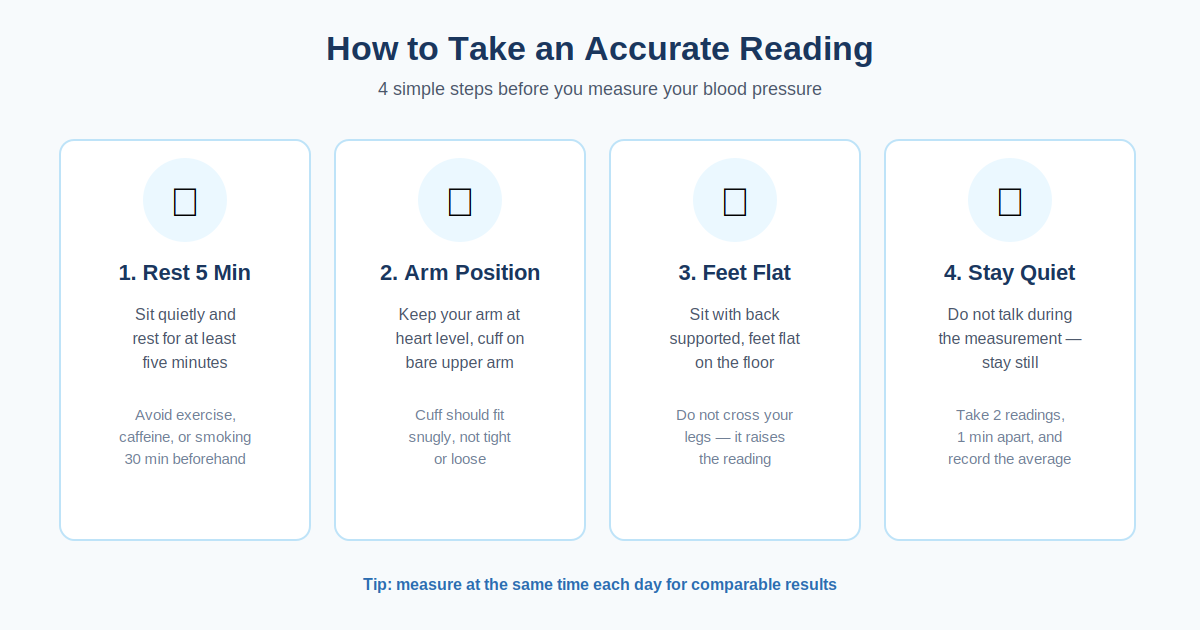
Technique changes results, so standardize it. Rest seated for five minutes, back supported, feet flat on the floor, and the cuffed arm resting at heart level. Use the right cuff size on bare skin, and avoid caffeine, exercise, and smoking for at least 30 minutes beforehand. Take two or three readings a minute apart and average them; a single reading is never a diagnosis. For a fuller picture of cardiovascular risk factors, our Waist to Hip Ratio Calculator covers fat distribution, which blood pressure readings alone do not show.
Frequently Asked Questions
What is a normal blood pressure reading?
Below 120 systolic and below 80 diastolic is considered normal by the AHA.
Is 135 over 88 dangerous?
It falls in Stage 1 Hypertension. It is not an emergency, but you should discuss it with your doctor and work on lifestyle changes.
Which number matters more, systolic or diastolic?
Both matter. Doctors look at the pair together, and the higher category of the two determines your classification.
Can one high reading mean I have hypertension?
No. Diagnosis requires multiple readings over time, ideally including home or ambulatory monitoring.
How can I lower my blood pressure naturally?
Reduce sodium, exercise regularly, maintain a healthy weight, limit alcohol, stop smoking, and manage stress.
What should I do if my reading is above 180 over 120?
Treat it as an emergency signal and get urgent medical help, especially with chest pain, shortness of breath, numbness, or trouble speaking. Do not wait for it to come down on its own.
Why is my clinic reading higher than my home reading?
That is white-coat hypertension: blood pressure rises with the stress of a medical visit. Home readings taken with proper technique often show the truer baseline, which is why clinicians ask for both.
Related Calculators
Try our BMI Calculator and Heart Rate Zone Calculator for more health tools.