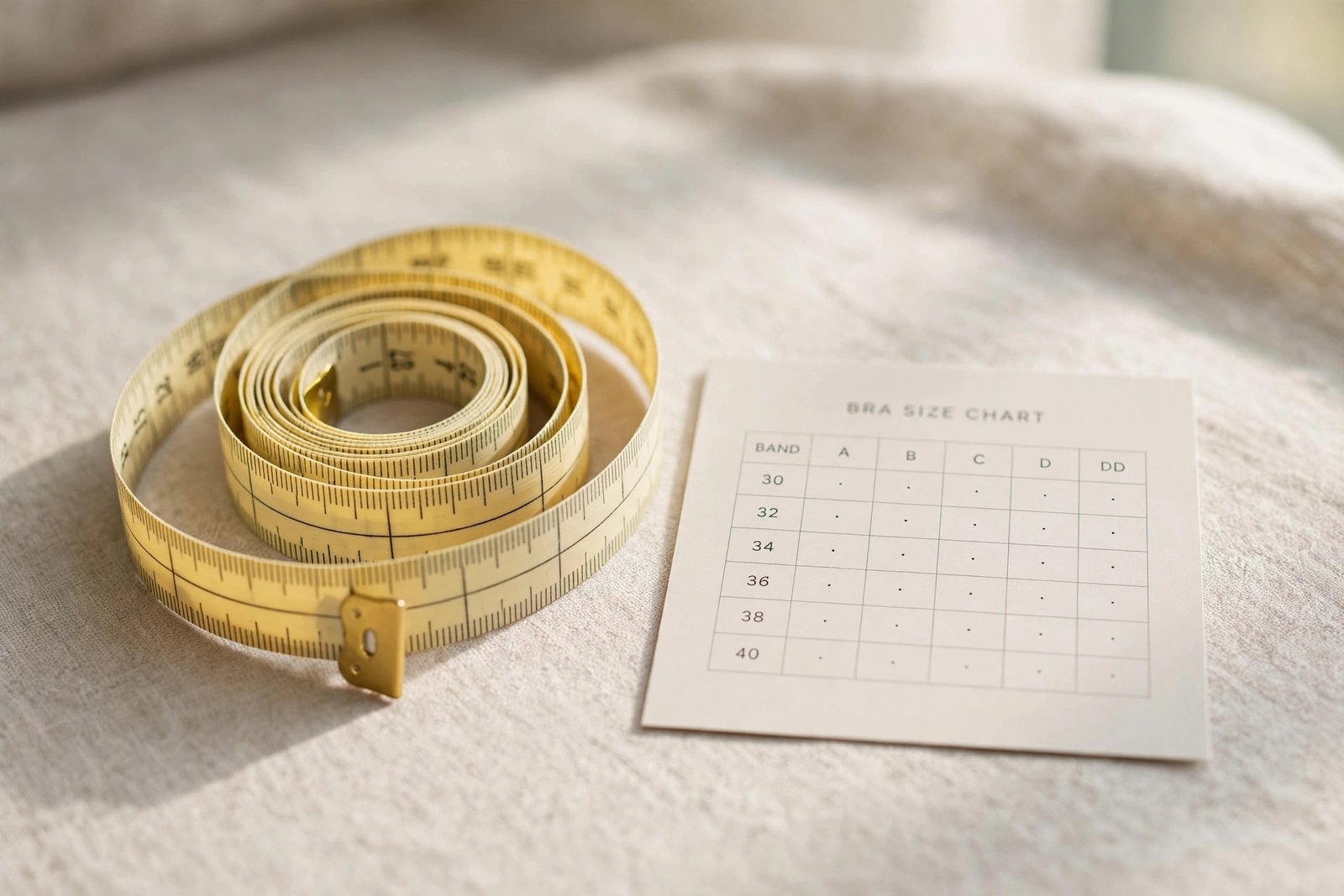
Most People Wear the Wrong Size — Two Measurements Fix That
Fitting surveys have repeatedly found that a large majority of shoppers wear a bra that does not truly fit them — usually a band that is too loose and a cup that is too small. The cause is rarely the body. It is the measuring method: for decades, the standard advice was to add four inches to the underbust, a rule that research has shown overestimates the band and underestimates the cup.
This free bra size calculator uses the modern method instead. Enter your underbust and bust measurements — in inches or centimeters — and it returns your size in US, UK and EU sizing, plus sister sizes and practical fit tips. No signup, no data stored, everything calculated privately in your browser.
Band · Cup · US / UK / EU sizing
in
in
? How do I measure correctly?
Underbust: wrap a soft measuring tape snugly around your ribcage, right under the bust. Keep it level front and back, breathe out normally, and read the number.
Bust: measure loosely around the fullest part of the chest, keeping the tape parallel to the floor. Wear a thin, non-padded bra so the tape is not lifted or compressed.
Tips: stand upright and relaxed (do not slouch or puff your chest), keep the tape flat without twisting, and measure on an average day. Re-check every 6–12 months — weight changes, pregnancy and normal hormonal cycles all shift the numbers.
Please check your measurements: underbust 20–60 in (50–152 cm), bust 20–70 in (50–178 cm), and bust equal to or larger than underbust.
A fitting starting point, not a medical device. The modern method rounds the underbust to the nearest even band with nothing added (the old “add 4 inches” rule overestimates the band). Fit still varies by brand and style — try the calculated size plus its sister sizes. Sudden or one-sided size changes should be discussed with a healthcare professional.
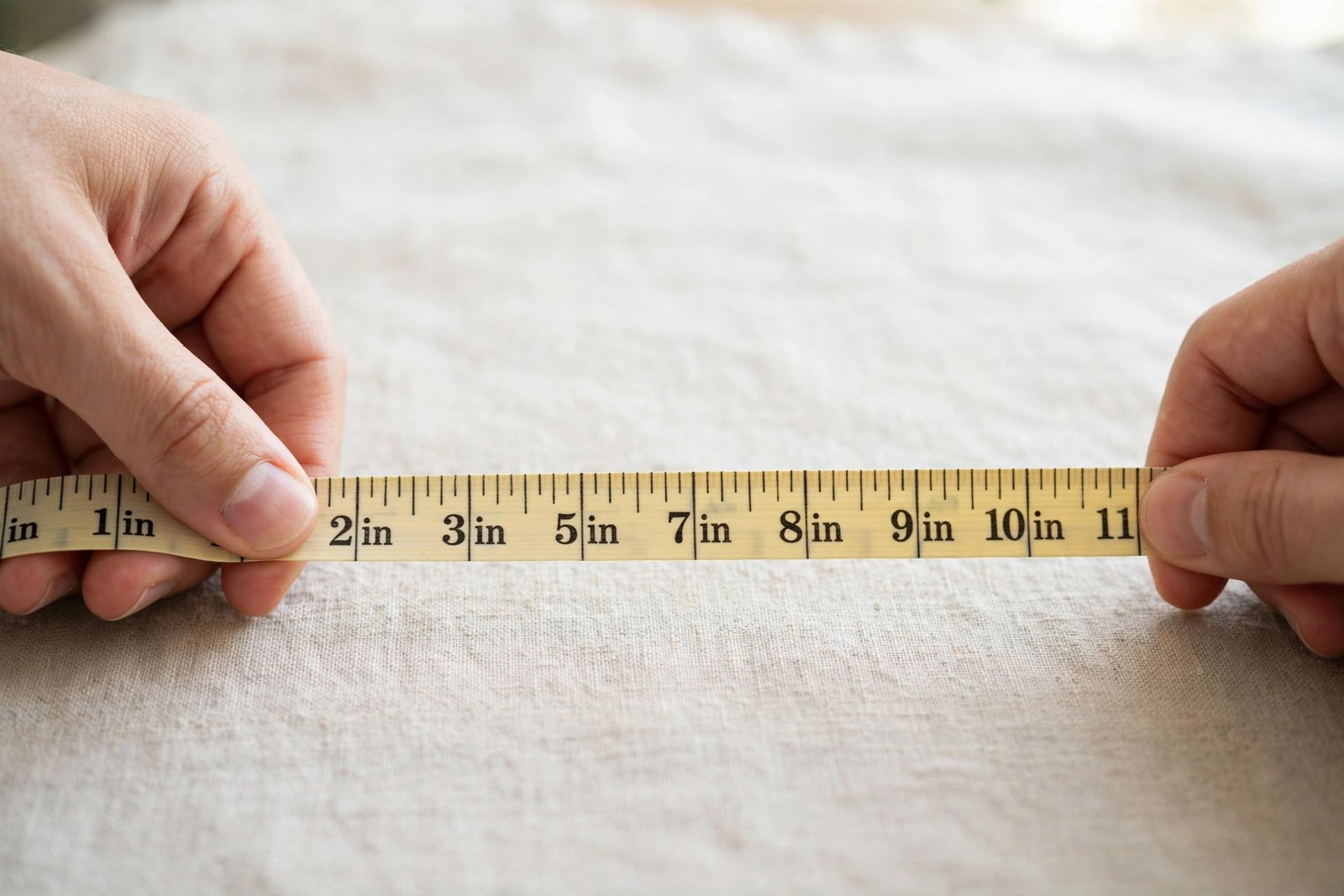
How to Measure Your Bra Size at Home
You only need a soft measuring tape and a mirror. The whole process takes about a minute:
- Measure your underbust. Wrap the tape snugly around your ribcage, directly under the bust. Keep it level all the way around — front and back — breathe out normally, and read the number. This determines your band.
- Measure your bust. Wrap the tape loosely around the fullest part of the chest, keeping it parallel to the floor. Wear a thin, non-padded bra so the tape is neither lifted nor compressed. This determines your cup.
- Enter both numbers above and press Calculate My Bra Size. The tool rounds your underbust to the nearest even band, subtracts it from your bust, and converts the difference into a cup letter.
Measure standing upright and relaxed. Measure on an average day — the bust can swell slightly before or during a menstrual cycle — and re-check every 6 to 12 months, because weight changes, pregnancy and normal hormonal shifts all move the numbers.
The Formula: Band + Bust Difference
Every sizing system in the world is built on the same two-step logic. Once you see it, you can estimate any size by hand:
Step 2 – Cup: subtract the band from the bust. Each inch of difference is one cup letter: 1″ = A, 2″ = B, 3″ = C, 4″ = D, 5″ = DD/E, and so on.
Worked example: underbust 32″, bust 35″. The band rounds to 32. The difference is 35 − 32 = 3 inches, which is a C cup. The size is 32C. A 33″ underbust with a 39″ bust rounds to a 34 band with a 5-inch difference — a DD cup, giving 34DD.
One crucial detail: a cup letter is relative to the band. A D cup on a 32 band holds a much smaller volume than a D cup on a 40 band. That is exactly why sister sizes exist — more on those below.
US, UK and EU Sizing: What Changes
Band numbers line up well between the US and UK, but the cup letters diverge above a D. EU bands are measured in centimeters instead of inches. This calculator returns all three systems at once:
| Bust − band | US cup | UK cup | EU cup |
|---|---|---|---|
| 0″ | AA | AA | AA |
| 1″ | A | A | A |
| 2″ | B | B | B |
| 3″ | C | C | C |
| 4″ | D | D | D |
| 5″ | DD (also E) | DD | E |
| 6″ | DDD (also F) | E | F |
| 7″ | G | F | G |
| 8″ | H | FF | H |
| 9″ | I | G | I |
| 10″ | J | GG | J |
EU band sizes step in fives of centimeters: a 32 band is roughly an EU 70, a 34 is about a 75. When buying from a British or European brand, always check that brand’s own chart — letters do not translate one-to-one.
Understanding Sister Sizes
Cup volume stays roughly constant if you move the band and cup in opposite directions: go down one band size and up one cup letter, or up one band and down one cup letter. That is why 32D, 34C and 30DD are called sisters — the cups hold a similar amount, but the bands fit different ribcages.
Sister sizes are the practical fix for the two most common fit complaints. If the cups feel right but the band is too tight, go up one band and down one cup (34C → 36B). If the band rides up at the back, it is too loose — go down one band and up one cup (34C → 32D). The calculator shows your nearest sisters automatically.
Who This Calculator Is For
- First-time buyers who have never been professionally fitted and need a reliable baseline before ordering online.
- Online shoppers who cannot try things on and want to narrow an order down to two or three sizes — your size plus its sisters.
- Anyone whose body has changed after weight change, pregnancy, breastfeeding or hormonal shifts and suspects the old size no longer fits.
- People taught the old “add 4 inches” rule whose bands have always felt loose and who want the modern, snugger-band method.
Quick fit checks after you calculate
- Fasten new bras on the loosest hook — you tighten inward as the elastic stretches over months of wear.
- The band should sit level and do most of the supporting; straps digging in usually means the band is too loose.
- The center gore (the fabric between the cups) should lie flat against the sternum; if it floats away, the cup is usually too small.
- Lean forward and settle all tissue fully into each cup before judging spillage or gaping.
Common Fit Problems and the First Fix to Try
- Spilling out of the cups — the cups are too small; go up one cup letter before changing anything else.
- Gaping cups — first try one cup down; if the size seems right but it still gaps, the style’s shape (not the size) is likely the mismatch.
- Straps slipping or digging — straps dig when the band is doing too little work. Re-check the band size first instead of just tightening the straps.
- Wires poking or sitting on breast tissue — the cups are too small or too narrow; go up a cup, and consider a wider wire style.
The golden rule: change one thing at a time. Adjust band or cup, not both, so you can tell which change actually fixed the problem.
Frequently Asked Questions
How do bra sizes work?
A bra size has two parts. The number is the band — your underbust rounded to the nearest even inch (28, 30, 32, 34…). The letter is the cup — the difference between your bust and your band, at one inch per letter: 1 inch is an A cup, 2 inches a B, 3 inches a C, and so on. So a 34C means a 34-inch band with a bust 3 inches larger. The letter is relative: a D cup on a 32 band is a smaller volume than a D cup on a 40 band.
How do I measure my bra size at home?
Wrap a soft tape snugly around your ribcage directly under the bust (exhale normally) for the underbust, then loosely around the fullest part of the chest while wearing a thin, non-padded bra for the bust. Enter both numbers in the calculator above — it rounds the underbust to the nearest even band and converts the bust-minus-band difference into your cup letter in US, UK and EU sizing.
What is the biggest bra size?
There is no single maximum — it depends on the brand and the sizing system. In standard US sizing, cup letters commonly run from AA up to K or L (a 12-inch bust-minus-band difference), and specialty brands go further. UK sizing continues past HH into J, JJ and K. If your difference is beyond 12 inches, look for full-bust specialty brands rather than high-street labels, and always check the brand’s own size chart.
What is the smallest bra size?
The smallest standard cup is AA, for a bust-minus-band difference of about zero to one inch. Bands commonly start at 28 in US/UK sizing (EU 60/65). An AA or A cup is completely normal — the letter only describes the difference between two measurements, nothing about body type or health.
What is the difference between a C cup and a D cup?
Exactly one inch of bust-minus-band difference: a C cup is a 3-inch difference, a D cup is a 4-inch difference on the same band. But remember the letter is relative — a 32D holds less volume than a 36D, which is why a 34C and a 32D can be sister sizes with similar cup volume.
Why does my band ride up at the back?
A band that rides up is almost always too big. The band — not the straps — should provide most of the support and sit level around your body. Try going down one band size and up one cup (a sister size), for example from 36C to 34D. Also check that you are fastening on the loosest hook of a new bra.
How is US sizing different from UK and EU sizing?
US and UK band numbers match, but cup letters diverge above D: a US DDD/F is a UK E, and a US G is a UK F. EU bands are measured in centimeters in steps of five (a 32 band is roughly EU 70). This calculator shows all three systems side by side so you can shop any brand.
How often should I re-measure my bra size?
Every 6 to 12 months is a good habit. Weight change, pregnancy, breastfeeding, hormonal cycles and even a regular training routine can shift your ribcage or bust by enough to change the size. If a bra that used to fit starts riding up, gaping or digging in, re-measure before assuming the bra wore out.
Should I measure in a bra or without one?
Either works if you are consistent, but measuring the bust over a thin, unpadded bra usually gives the most reliable full-bust number, because it matches how the bra will actually sit. The underbust (band) measurement should be taken directly on skin, pulled snug at the end of a normal exhale.
What if I am between two band sizes?
Start with the larger band if the cups fit well — a too-tight band distorts the cups and feels worse by the hour. Or use the sister size that keeps the cup volume: one band up and one cup letter down. Whichever you choose, check that the band sits level and snug on the loosest hook when the bra is new.
Final Thoughts
A well-fitting bra changes how clothes sit, how your posture feels and how comfortable the whole day is — and getting there takes two tape measurements and one minute. Use the calculator above as your starting point, try your size alongside its sister sizes, and trust the band that stays level over the number you have always bought.
Know Your Numbers?
Pair your new size with our body fat percentage calculator and ideal weight calculator for a fuller picture of your body measurements.