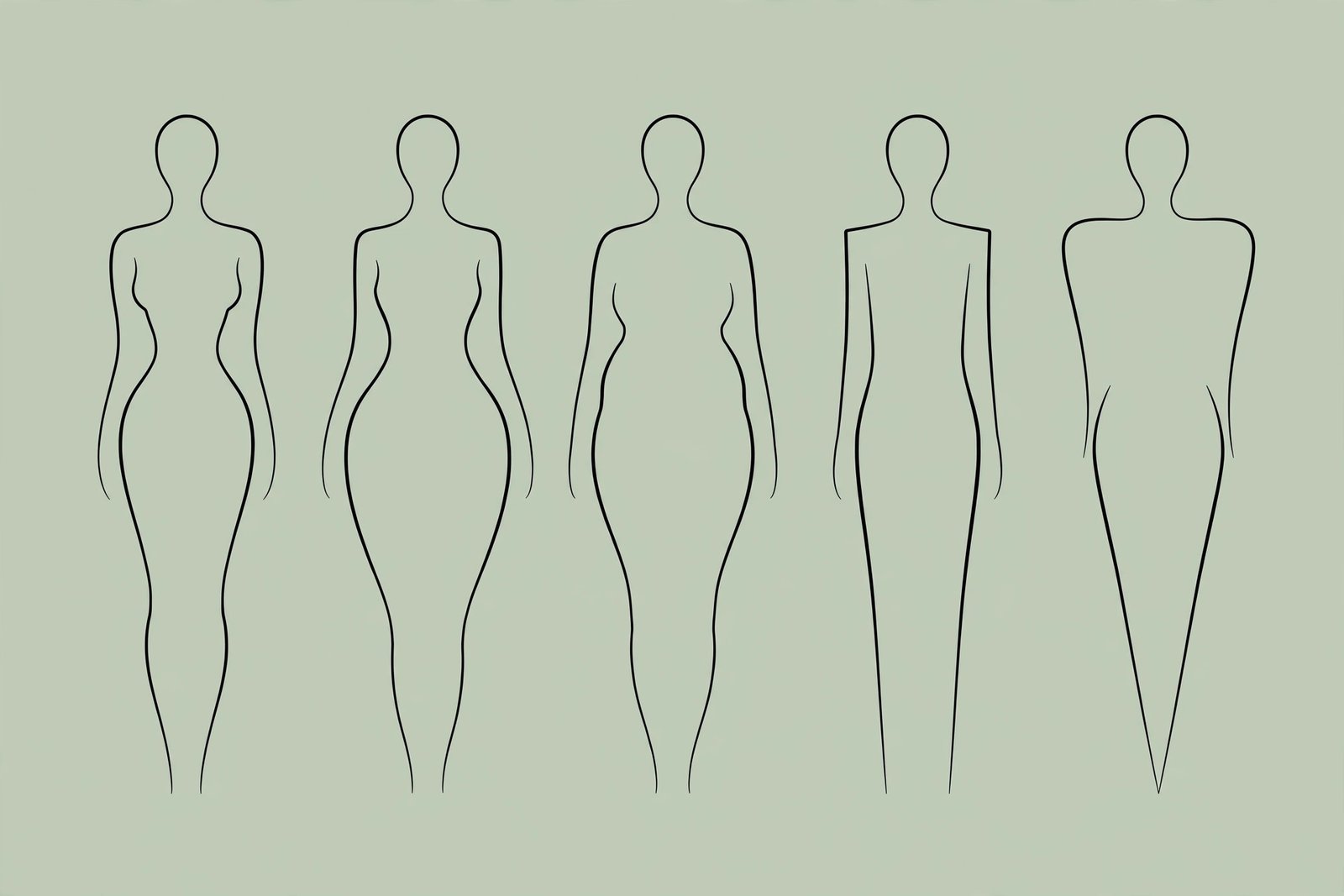
Your Proportions Tell a Story — Three Numbers Reveal It
Shopping for clothes that never quite fit the way the model wears them? The missing piece is rarely your size — it is your shape. Two people can wear the same dress size and need completely different cuts, because bodies distribute volume differently across the bust, waist and hips.
This free body shape calculator takes your three key measurements and classifies your silhouette into one of five classic shapes: hourglass, pear, apple, rectangle, or inverted triangle. Along the way it also computes your waist-to-hip ratio and waist definition — two numbers stylists actually use when recommending cuts.
Bust · Waist · Hips · 5 classic silhouettes
? How do I measure correctly?
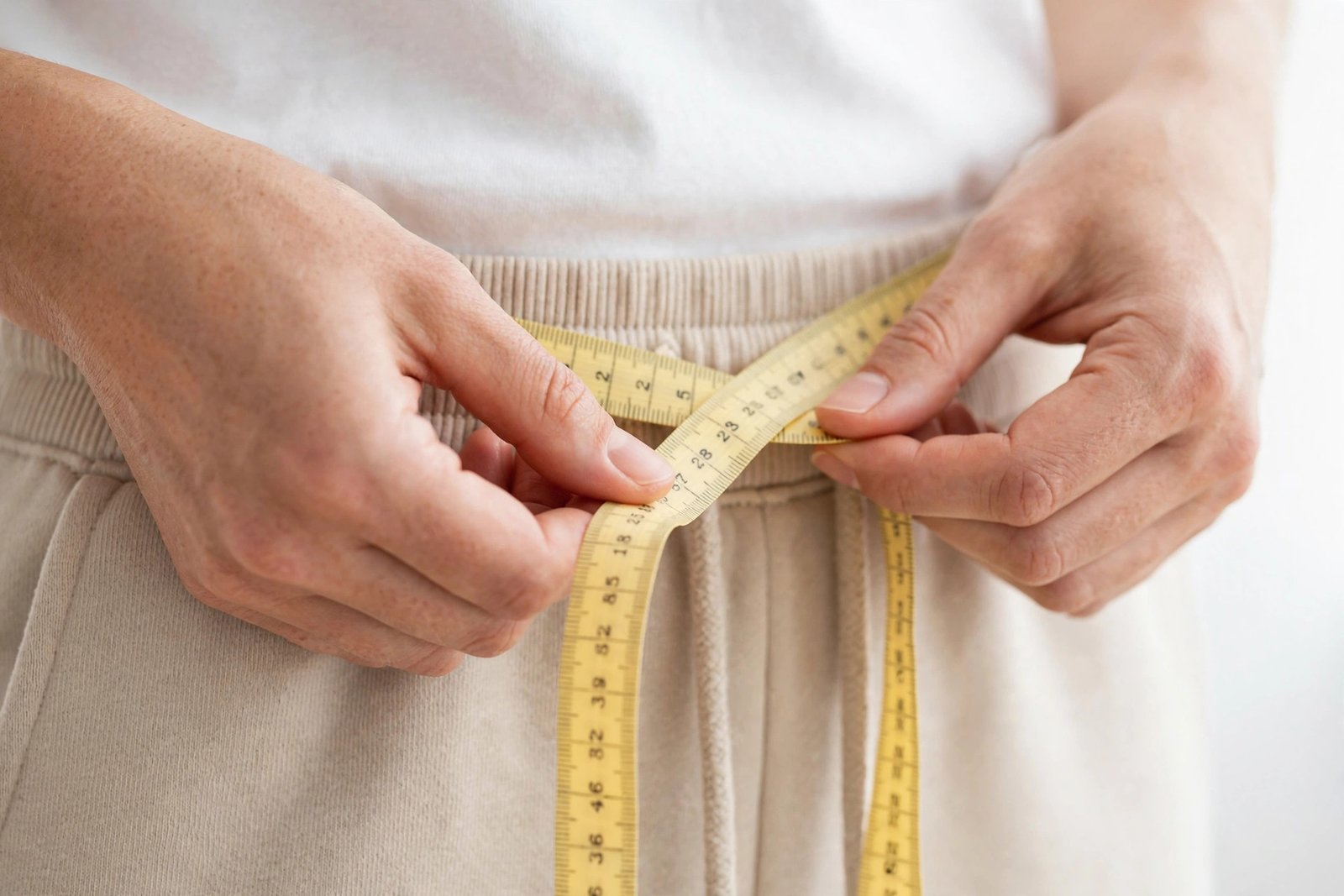
Use a soft measuring tape over thin clothing or bare skin. Stand relaxed with feet together — do not suck in your stomach or puff your chest.
Bust/chest: around the fullest part, keeping the tape horizontal. Waist: the narrowest part of your torso, usually just above the navel. Hips: the fullest part of your hips and seat, feet together.
Measure at the same time of day if you want to compare results later; numbers shift slightly through the day.
Please enter valid measurements: all values must be positive and within a realistic range.
A silhouette guide, not a medical assessment. Shapes describe proportions — every body is a mix, and labels never define health, attractiveness or worth. For health context, pair this with waist circumference and body fat percentage rather than shape alone.
How to Measure for the Body Shape Calculator
- Grab a soft measuring tape and wear thin clothing (or measure on bare skin for best accuracy).
- Bust/chest: measure around the fullest part, keeping the tape horizontal and snug — not tight.
- Waist: find the narrowest part of your torso, usually just above the navel. Breathe normally; do not suck in.
- Hips: stand with feet together and measure around the fullest part of your hips and seat.
- Enter the three numbers above (inches or centimeters) and click Find My Body Shape.
The Formula: How Shapes Are Classified
• Hips − bust > 3.6″ → Pear
• Bust − hips > 3.6″ → Inverted triangle
• Balanced bust/hips (≤ 3.6″ gap) + waist ≥ 9″ under → Hourglass
• Waist within 4″ of bust → Apple
• Otherwise → Rectangle
Waist-to-hip ratio = waist ÷ hips
Worked example: bust 36″, waist 26″, hips 37″. Hip−bust gap = 1″ (balanced); waist definition = 36 − 26 = 10″ (≥ 9) → Hourglass. Waist-to-hip ratio = 26 ÷ 37 = 0.70.
The Five Body Shapes at a Glance
| Shape | Proportions | Styling notes |
|---|---|---|
| Hourglass | Balanced bust/hips, defined waist | Belted waists, wrap dresses, fitted jackets |
| Pear | Hips wider than bust | Volume on top, darker streamlined bottoms |
| Apple | Fuller midsection | Empire waists, V-necks, structured fabrics |
| Rectangle | Straighter bust-waist-hip line | Peplums, ruffles and layering add curves |
| Inverted triangle | Bust/shoulders broader than hips | Volume below the waist, clean lines up top |
Who Benefits From Knowing Their Body Shape
Everyday shoppers save money on returns by filtering for cuts that suit their silhouette. Fitness enthusiasts use shape alongside waist-to-hip ratio to track how training redistributes their proportions over time. Tailors and stylists use the same five-shape language with clients.
A quick reality check: shape labels describe proportions, not health or worth. Bodies also change — pregnancy, training and normal aging all shift measurements, so re-measure every 6–12 months if you use this for wardrobe planning.
Between Two Shapes? How to Read a Borderline Result
The calculator draws sharp lines — a gap of about 3.6 inches here, 9 inches of waist definition there — but real bodies are continuous. If your measurements land close to a boundary, read the result as “mostly this shape, with traits of the neighbor.” A waist definition of 8.7 inches does not behave differently from 9.1 inches in a fitting room.
Before deciding, re-measure once, carefully: same tape, same spots, relaxed breathing, ideally at the same time of day. Small things — a held-in stomach, a tape riding up at the back — easily shift a reading by half an inch, which is all it takes to flip a borderline classification. Then dress for the shape you are closest to, borrowing the neighbor’s tricks for the features that cross over: a near-hourglass rectangle, for instance, still gains from belts and waist emphasis either way.
Frequently Asked Questions
What are the 5 female body shapes?
The five classic silhouettes are hourglass (balanced bust and hips with a defined waist), pear (hips wider than bust), apple (fuller midsection), rectangle (straighter bust-waist-hip line) and inverted triangle (broader bust/shoulders than hips).
How do I know my body shape with measurements?
Measure your bust, waist and hips with a soft tape, then compare the proportions: a hip-minus-bust gap over about 3.6 inches points to pear (or inverted triangle if the bust is larger), a waist roughly 9 inches under balanced bust/hips points to hourglass, and a waist close to the bust points to apple.
What is a good waist-to-hip ratio?
Waist-to-hip ratio is simply waist divided by hips. Health guidelines often cite below 0.85 for women and below 0.90 for men as lower-risk ranges for the ratio alone, but it is one number among many — not a diagnosis.
Can your body shape change?
Yes. Weight change, strength training, pregnancy, hormonal shifts and aging can all move measurements enough to change the classification. That is normal — re-measure every 6 to 12 months if you track it.
Is the apple shape unhealthy?
Body shape alone does not determine health. Carrying more weight around the midsection is associated with higher metabolic risk on average, which is why waist circumference matters — but individual health depends on many factors beyond silhouette.
Do men have body shapes too?
Yes — the same measurement logic applies using chest instead of bust. Common male silhouettes include rectangle, inverted triangle (broad shoulders), oval/apple and trapezoid.
What if my measurements fall between two body shapes?
That is common and normal — the categories are sharp lines drawn on a continuous range of bodies. Re-measure carefully first; if you still sit near a boundary, dress primarily for the closest shape and borrow styling ideas from the neighboring one for your crossover features.
Final Thoughts
Three tape measurements, thirty seconds, and you will never again wonder why a garment that is technically “your size” fits oddly. Use your shape as a shopping filter, re-check it once or twice a year, and pair it with waist-to-hip ratio when you want the health side of the story too.
Know Your Shape — Now Know Your Numbers
Pair your result with our body fat percentage calculator and ideal weight calculator for the full picture.