Estimate the fees and taxes due when buying a home — typically 2–5% of the price.
Results are estimates for planning purposes and are not financial, medical, or professional advice.
How to Use the Closing Cost Calculator
Closing costs are the fees and charges due when you finalize a home purchase, and they often surprise first-time buyers. This calculator gives a quick percentage estimate of those costs, so you can budget early and check lender quotes against it.
- Enter the home purchase price.
- Choose a level: Low 2 percent, Typical 3 percent or High 5 percent.
- Calculate to see your estimate plus the full typical range of 2 to 5 percent for that price.
Closing Cost Calculator Formula
The estimate is simple: closing costs equal the home price times the percentage you select. The levels reflect the range buyers commonly pay, from about 2 percent in low-cost areas to about 5 percent where taxes and lender fees run high. It is a planning estimate, not an itemized quote.
Example Calculation
On a 400,000 dollar home, the Low level gives 400,000 × 2 percent, or 8,000 dollars; Typical gives 12,000 dollars; and High gives 20,000 dollars. Budget around Typical and keep High as a safe upper bound.
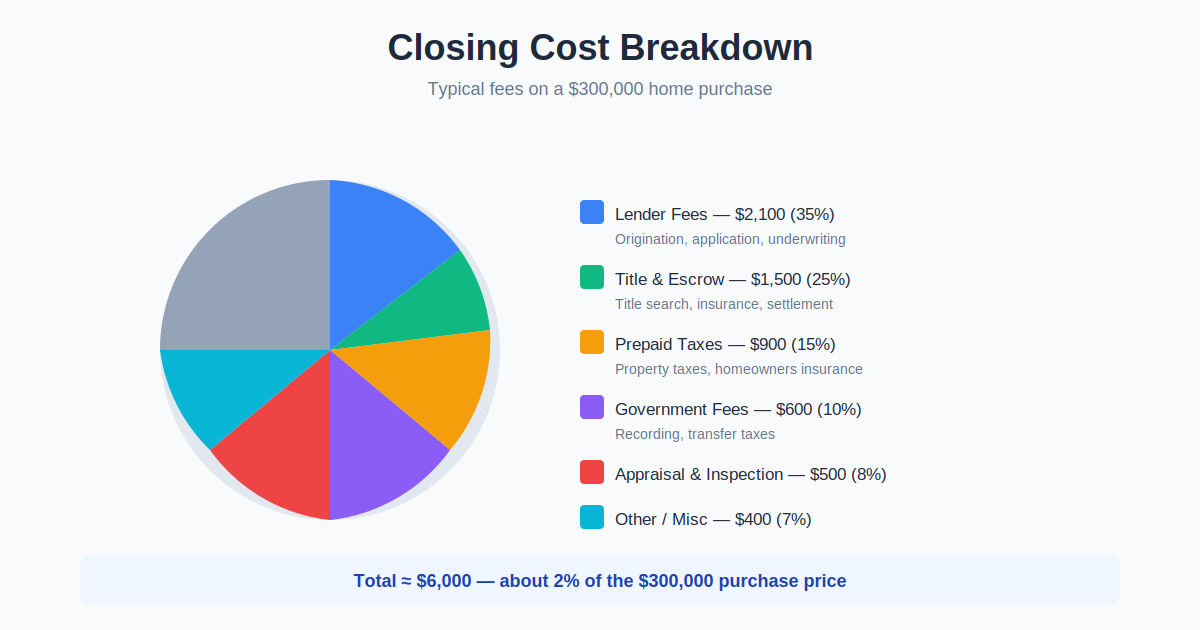

What Closing Costs Include
Four groups make up most bills. Lender fees cover origination, underwriting and any discount points. Title and escrow charges cover the title search, title insurance and settlement. Government charges include recording fees and transfer taxes. Prepaids are not fees: they are insurance, taxes and interest collected in advance.
Closing Costs vs Cash to Close
Closing costs are only part of the money due that day. Cash to close equals the down payment plus closing costs, minus any seller or lender credits. On the 400,000 dollar example, 10 percent down (40,000 dollars) plus 12,000 dollars of Typical costs means 52,000 dollars before credits.
Frequently Asked Questions
Who pays closing costs, the buyer or seller?
Both typically pay some. Buyers cover lender fees, while sellers often pay agent commissions and transfer taxes, though everything is negotiable and varies by local custom.
Can closing costs be rolled into the mortgage?
Sometimes, but financing the fees means paying interest on them for decades. Paying cash at closing is usually cheaper.
What are discount points?
Points are prepaid interest: one point equals 1 percent of the loan amount paid upfront to buy down the rate. They pay off only if you keep the loan long enough for the savings to exceed the cost.
How can I lower my closing costs?
Compare Loan Estimates from at least three lenders, negotiate origination fees and ask the seller for credits. Consider a no-closing-cost loan only if you accept the higher rate tradeoff.
When do I get the exact closing figures?
Your lender must provide a Closing Disclosure at least three business days before closing. Compare it against the earlier Loan Estimate and question any fee that grew.
What is the difference between closing costs and prepaids?
Closing costs are fees for completing the purchase, such as lender charges and title insurance. Prepaids are future bills paid in advance, such as insurance, escrowed property taxes and prepaid interest.
What percentage of the price are closing costs on average?
Buyers commonly pay about 2 to 5 percent of the price. On a 400,000 dollar home that is 8,000 to 20,000 dollars, with the typical 3 percent estimate at 12,000 dollars.
Related Calculators
Try our Mortgage Calculator and Amortization Schedule Calculator for more financial planning tools.