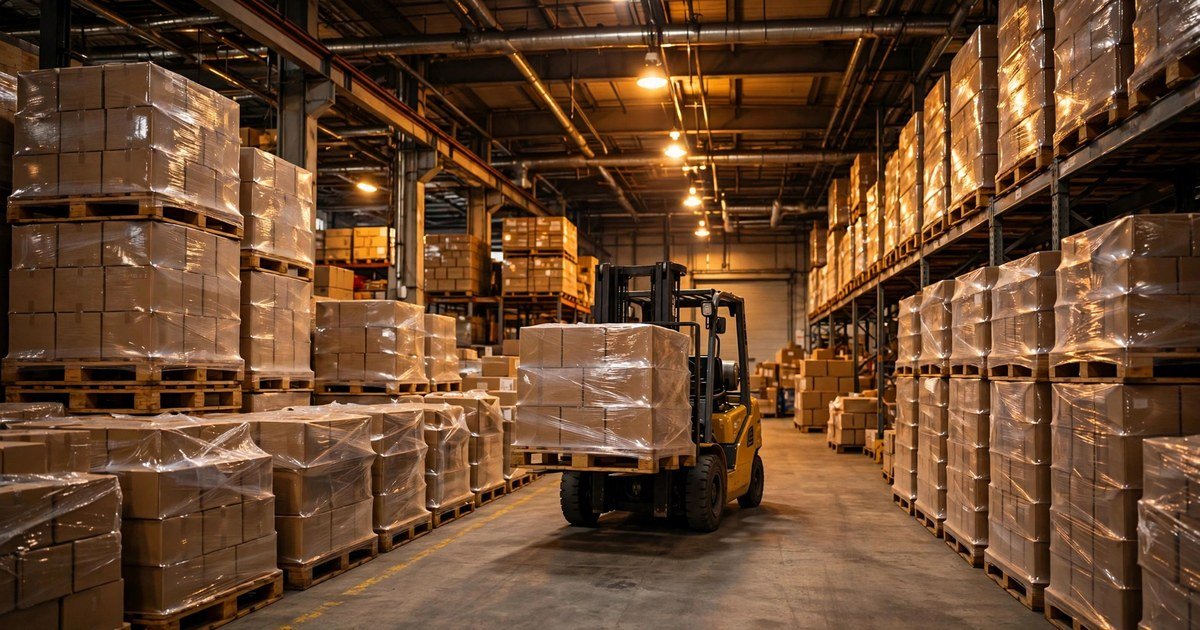
You’re Not Paying for Weight. You’re Paying for Space.
Less-than-truckload (LTL) carriers sell trailer space, not pounds. A 500-pound pallet of tightly packed goods and a 500-pound pallet of bulky, half-empty boxes take the same weight but wildly different amounts of room — so they get different freight classes and very different rates. The National Motor Freight Traffic Association (NMFTA) publishes the density scale that turns your shipment’s measurements into one of 18 numbered classes, from 50 to 500.
This free freight class calculator does the whole job: enter the weight and the length, width, and height, and it returns your cubic feet, your density in pounds per cubic foot (PCF), your estimated class, and — the part most calculators skip — what that class actually means for your shipping cost.
Density · NMFTA class · cubic feet
Please enter a weight above 0 lbs and dimensions above 0 inches.
Your estimated freight class
Based on NMFTA density chart
This is a density-based estimate. The official NMFC class can also depend on handling, stowability, and liability — some commodities carry a fixed class regardless of density. Confirm the final class with your carrier before quoting. Educational math, not a binding freight quote.
How to Use This Calculator
- Weigh the shipment — total weight in pounds, including the pallet and packaging. A scale beats a guess every time.
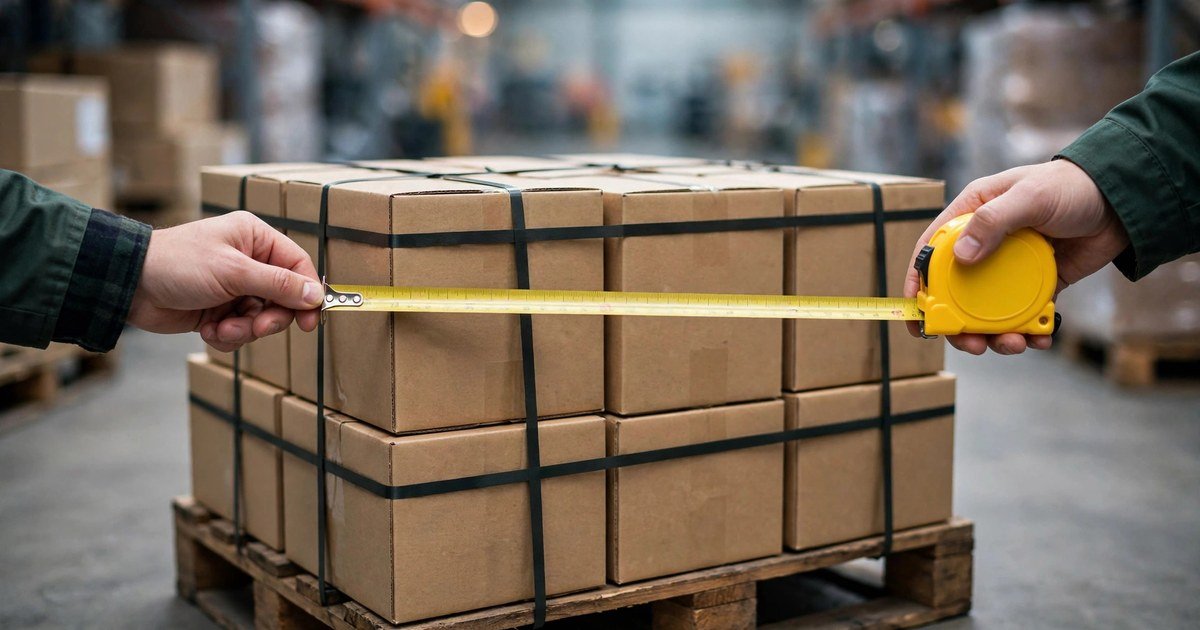
- Measure the outside dimensions — length, width, and height in inches, to the tallest and widest points of the loaded pallet. (A standard pallet is 48″ × 40″.)
- Click “Calculate Freight Class” — you’ll get the cubic feet, density, your NMFTA class, and a plain-English explanation of what that class costs you.
What Is Freight Class (NMFTA)?
Freight class is the standardized billing category LTL carriers use to price shipments. The National Motor Freight Traffic Association (NMFTA) maintains the National Motor Freight Classification (NMFC), which defines 18 classes numbered 50 through 500. Four factors can set a class — density, handling, stowability, and liability — but for ordinary boxed or palletized goods, density alone decides it.
The rule is simple and works in one direction: denser freight gets a lower class number and cheaper rates. Class 50 is the densest category (bricks, steel) and the cheapest to ship; Class 500 is the lightest per cubic foot (packing foam, ping pong balls) and the most expensive. Most everyday palletized shipments land somewhere between Class 70 and Class 125.
The Density Formula
Density (PCF) = Weight (lbs) ÷ Cubic feet
Freight class = the NMFTA class whose density band contains your PCF
Worked example
A 500-pound pallet measuring 48″ × 40″ × 48″:
- Cubic feet: 48 × 40 × 48 = 92,160 ÷ 1,728 = 53.33 cu ft
- Density: 500 ÷ 53.33 = 9.375 lbs per cubic foot
- Class: 9.375 falls in the 9–10.5 band, so this is Class 100 — the benchmark most LTL rates are priced against.
The Full NMFTA Class Chart
Find your density row to see the class, the rate level, and the kind of freight that typically lands there:
| Class | Density (lbs/cu ft) | Rate level | Typical freight |
|---|---|---|---|
| 50 | 50 or more | Lowest | Bricks, cement, steel, hardwood flooring |
| 55 | 35 to under 50 | Very low | Very dense machinery parts, stone |
| 60 | 30 to under 35 | Very low | Heavy castings, dense hardware |
| 65 | 22.5 to under 30 | Low | Canned goods in bulk, dense packaged foods |
| 70 | 15 to under 22.5 | Low–mid | Books, bottled beverages, car engines |
| 77.5 | 13.5 to under 15 | Mid | Dense consumer goods, small appliances |
| 85 | 12 to under 13.5 | Mid | Average boxed goods, crated items |
| 92.5 | 10.5 to under 12 | Mid–high | Auto parts, electronics in bulk |
| 100 | 9 to under 10.5 | Mid–high | Typical palletized boxes — the pricing benchmark |
| 110 | 8 to under 9 | High | Furniture, boat hulls |
| 125 | 7 to under 8 | High | Boxed appliances, crated machinery |
| 150 | 6 to under 7 | High | Automotive sheet metal, large crated goods |
| 175 | 5 to under 6 | Very high | Clothing, upholstered furniture |
| 200 | 4 to under 5 | Very high | Mattresses, aluminum tables |
| 250 | 3 to under 4 | Very high | Bamboo furniture, large plastic items |
| 300 | 2 to under 3 | Highest | Foam products, boat hulls |
| 400 | 1 to under 2 | Highest | Deer antlers, lightweight composites |
| 500 | Under 1 | Highest | Ping pong balls, packing foam, empty containers |
Boundary rule: a density sitting exactly on a boundary belongs to the denser (lower, cheaper) class — 15.0 PCF is Class 70, not 85. This calculator applies that rule automatically.
Note: in July 2025 the NMFTA consolidated the scale into 13 density subprovisions for many commodities, and certain items still carry fixed classes assigned by their NMFC item number. The classic 18-class table above is what this calculator estimates from — always confirm the official class with your carrier.
The 2025 NMFTA Update: A 13-Class Density Scale
In July 2025 the NMFTA consolidated its density scale from 18 classes to 13 (Docket 2025-1). Classes 50, 55, 60, 65, 70, 85 and 92.5 kept their density bands; below that the ladder compressed: 8 to under 10 PCF is now Class 100, 6 to under 8 is Class 125, 4 to under 6 is Class 175, 2 to under 4 is Class 250, 1 to under 2 is Class 300, and under 1 PCF is Class 400. The old density-based classes 77.5, 110, 150 and 200 were retired from the scale, though specific NMFC items can still carry their own assigned classes.
Our worked example — 9.375 PCF — is Class 100 under both scales. This calculator estimates from the classic table above, which stays useful for planning and quotes; your carrier applies the current NMFC item for your commodity on the final bill.
Tips: Packaging Changes Your Density (and Your Bill)
- Kill the empty space. The fastest way to a lower, cheaper class is to shrink the box. Same weight in fewer cubic feet = higher density = lower class. Oversized packaging is a surcharge you give yourself.
- Include everything in the measurements. Measure the pallet, the shrink wrap, and the tallest box — carriers measure the whole unit, and underreporting gets you re-classed and re-billed.
- Adding weight can lower your rate. A pallet at 7.9 PCF (Class 125) that gains enough weight to reach 8.0 PCF becomes Class 110 — a cheaper class despite weighing more.
- Standard pallets are predictable. A 48″ × 40″ pallet is the industry baseline; knowing its height and weight lets you estimate class before the truck arrives.
- Multi-piece shipments use aggregate density. For several different pallets on one bill of lading, carriers sum all weights and all volumes, then divide once — run each pallet through the calculator, then total them.
Frequently Asked Questions
How do you calculate freight class?
Compute the shipment’s volume in cubic feet (length × width × height in inches, divided by 1,728), then divide the total weight in pounds by that volume to get density in pounds per cubic foot (PCF). Look up the density on the NMFTA chart: 9.375 PCF, for example, is Class 100.
What is PCF in freight shipping?
PCF stands for pounds per cubic foot — your shipment’s density. It is the single biggest driver of your LTL freight class: more weight packed into less space means higher density, a lower class number, and a lower rate.
Why does lower density cost more?
LTL carriers sell trailer space. Light, bulky freight fills the trailer without adding billable weight, so the carrier charges more per pound to cover the space it occupies. Dense freight uses space efficiently, so it earns the cheapest rates.
Is the class from this calculator official?
It’s an accurate density-based estimate. The official NMFC class can differ because classification also considers stowability, handling, and liability, and some commodities carry a fixed class regardless of density. Use the calculator to anticipate your class, then confirm the exact NMFC item with your carrier.
Can I lower my freight class to pay less?
Usually yes: shrink the packaging to remove empty air, or consolidate to add weight in the same volume. Both raise density, which moves you into a lower, cheaper class. Even a small change can matter near a boundary — crossing from 7.9 to 8.0 PCF drops you from Class 125 to Class 110.
What density does a standard pallet need for Class 100?
Class 100 covers 9 to under 10.5 PCF. A 48″ × 40″ × 48″ pallet is 53.33 cubic feet, so it needs roughly 480 to 560 lbs to land in Class 100 — the 500-lb example above sits at 9.375 PCF, right in the middle.
Do all carriers use the same density scale?
Yes — the density-to-class scale is published by the NMFTA and is the industry standard, so the density-based class is consistent across carriers. Differences only appear for commodities with specific NMFC item numbers, which always take precedence over the density estimate.
What changed in freight classes in 2025?
In July 2025 the NMFTA cut the density scale from 18 classes to 13, retiring density-based classes 77.5, 110, 150 and 200 and re-banding the lighter end of the scale. Dense freight (Class 50–92.5) was unchanged, and specific commodities can still carry fixed NMFC classes.
Final Thoughts
Freight class rewards efficient packing: every cubic foot of air you ship is space you paid for at a higher rate. Measure honestly, pack tightly, and run the numbers before the carrier does — knowing your class in advance turns the quote conversation from a surprise into a negotiation.
Shipping More Than Freight?
Convert volumes with our cubic yard calculator and estimate dense loads with our metal weight calculator.