Estimate your fertile window and ovulation day from your last period and cycle length.
Results are estimates for planning purposes and are not financial, medical, or professional advice.
How to Use the Ovulation Calculator
Ovulation is when an ovary releases an egg, and it marks your most fertile days. Enter details about your menstrual cycle, and the calculator estimates your ovulation day and fertile window for the coming months.
- Enter the first day of your most recent period.
- Enter your average cycle length in days. The average is 28, but anything from 21 to 35 can be normal.
- Choose how many upcoming cycles you want predicted.
- Note your estimated ovulation day and the fertile window around it, shown on the calendar.
Ovulation Calculator Formula
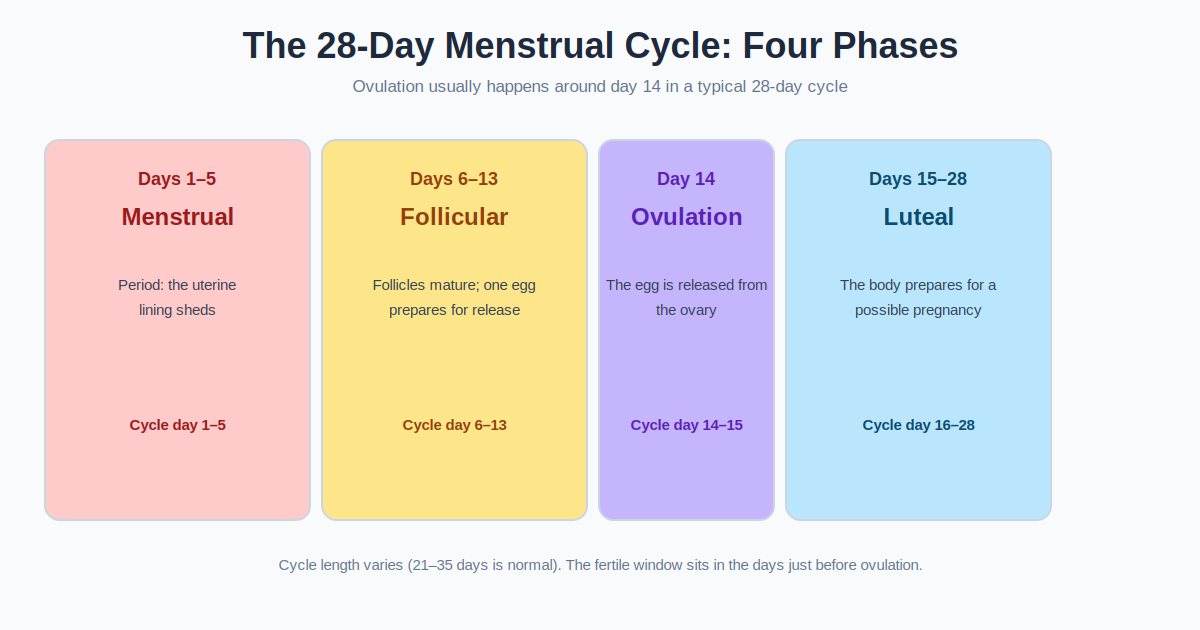
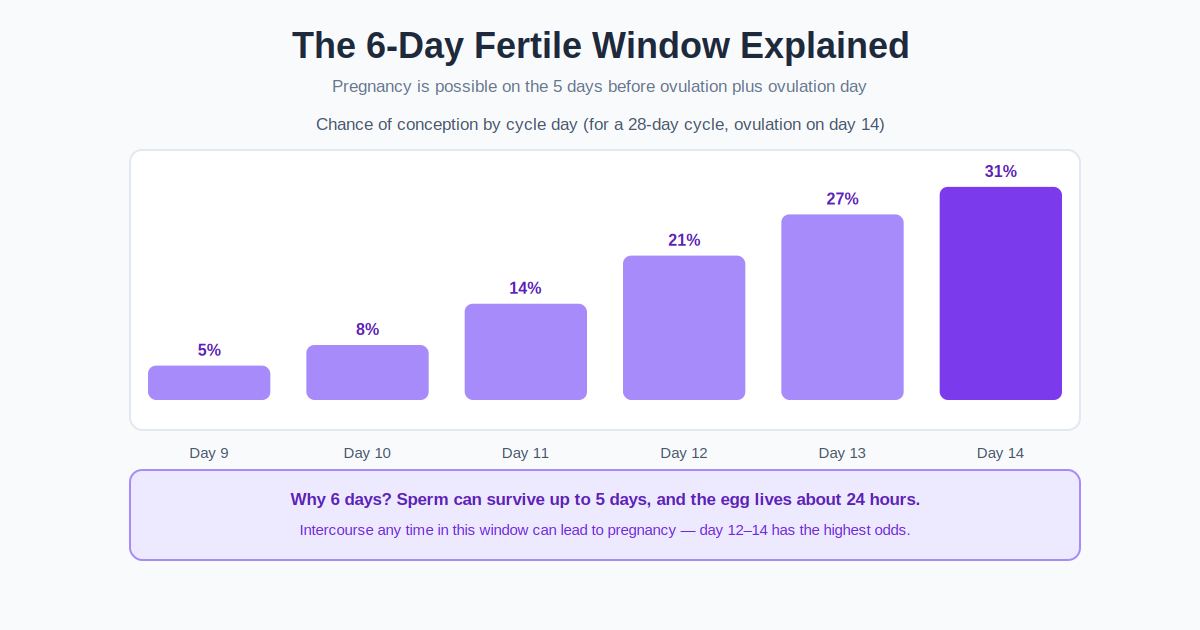
Ovulation typically happens about 14 days before your next period starts, regardless of cycle length. Those last fourteen days are called the luteal phase, and because this phase stays nearly constant even when overall cycle length varies, counting back from your next expected period is more reliable than counting forward from your last one. The calculator subtracts 14 from your cycle length to find ovulation day, counting from the first day of your last period. Your fertile window covers the five days before ovulation plus ovulation day itself, since sperm can survive several days.
Ovulation day = cycle length minus 14. Fertile window = (ovulation day minus 5) through (ovulation day plus 1).
Example Calculation
If your last period started on January 1 and your cycle is 28 days, ovulation falls on day 28 minus 14 = day 14, which is January 15. Your fertile window runs from January 10 through January 16.
With a longer 32-day cycle starting January 1, ovulation lands on day 32 minus 14 = day 18, or January 19. The fertile window shifts to January 14 through January 20. Longer cycles mean later ovulation.
Frequently Asked Questions
How accurate is an ovulation calculator?
It is an estimate based on averages, accurate for people with regular cycles. Stress, illness, and travel can shift ovulation by days, so treat the fertile window as a guide rather than a guarantee.
What if my cycles are irregular?
The calculator is less reliable with irregular cycles. Track at least three months to find your average, and consider ovulation predictor kits or basal body temperature tracking for better precision.
Can you get pregnant outside the fertile window?
Pregnancy is very unlikely outside the fertile window, since the egg survives only 12 to 24 hours after ovulation. However, sperm can live up to five days, which is why the window starts before ovulation day.
What are the physical signs of ovulation?
Many people notice clear, stretchy cervical mucus, mild pelvic cramping on one side, a slight rise in basal body temperature, and increased libido around ovulation.
When should I take a pregnancy test?
Wait until the first day of your missed period for the most reliable result. Testing earlier can give a false negative because the pregnancy hormone may not yet be detectable.
How can I confirm ovulation actually happened?
Three signs help confirm it: an ovulation predictor kit detects the LH hormone surge about a day or two before ovulation, basal body temperature rises by roughly half a degree just after ovulation, and cervical mucus becomes clear and stretchy in the days before. Used together, they pinpoint ovulation far better than calendar math alone.
Related Calculators
Support your health goals with our BMI Calculator and our Calorie Calculator for balanced nutrition planning.
Related Guides
Learn more in our detailed guide: How to Track Ovulation: Fertile Window Explained.