
From Two Measurements to the Number That Matters
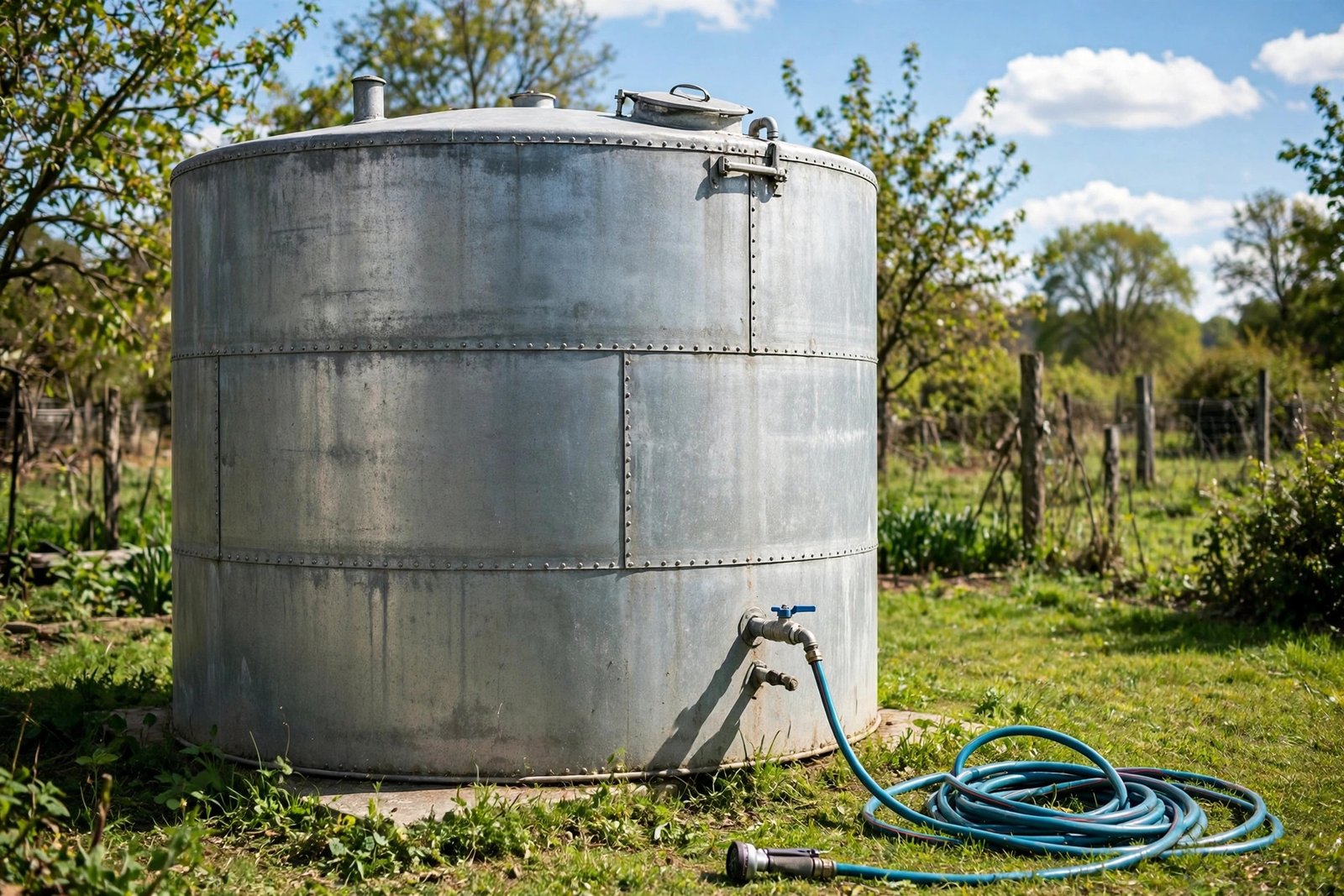
Water tanks, oil drums, pipes, concrete pillars, coffee mugs — the cylinder is one of the most common shapes in the world, and its volume is one of the most useful numbers you can know. The question “how many gallons fit in here?” is really just two measurements and one formula.
This free cylinder volume calculator takes your radius or diameter and height in inches, feet, centimeters, or meters, and returns the volume in cubic units plus gallons and liters, with total surface area as a bonus. Every result shows the exact steps behind it.
Radius · Height · Cubic units · Liquid capacity
Please enter the radius (or diameter) and height. Both must be greater than zero.
Volume of your cylinder
V = π × r² × h
How to Use This Calculator
- Choose radius or diameter — tap whichever you can measure more easily. Diameter is halved automatically.
- Enter your two measurements — e.g., radius 3 in and height 10 in.
- Pick your unit — inches, feet, centimeters, or meters. Both measurements use it.
- Click “Calculate Volume” — volume, gallons/liters, surface area, and base area all appear with a step-by-step breakdown.
The Formula: Base Area × Height
A cylinder is just a circle stretched upward. So its volume is the area of the circular base times the height:
Volume = π × r² × h
Total surface area = 2πr(r + h)
Two things trip people up: radius vs. diameter (the radius is half the diameter — the toggle above handles it) and mixing units (3 feet of radius with 10 inches of height will give a wrong answer on any calculator).
Worked example
A paint bucket has a radius of 5 in and a height of 14 in. How much paint does it hold?
- Base area: π × 5² = 3.14159 × 25 = 78.54 in²
- Volume: 78.54 × 14 = 1,099.56 in³
- As liquid: 1,099.56 × 0.004329 = ≈ 4.76 US gallons (≈ 18.02 liters)
- Surface area: 2π × 5 × (5 + 14) = ≈ 596.9 in²
Handy Unit Conversions
| Your unit | Volume conversion |
|---|---|
| Cubic inches | 1 in³ = 0.004329 US gallons = 0.0163871 liters |
| Cubic feet | 1 ft³ = 7.48052 US gallons = 28.3168 liters |
| Cubic centimeters | 1,000 cm³ = 1 liter |
| Cubic meters | 1 m³ = 1,000 liters = 264.172 US gallons |
The calculator applies these automatically.
US Gallons vs Imperial Gallons
The gallons shown here are US gallons: 231 cubic inches, about 3.785 liters. An imperial gallon, used in the UK and Canada, is larger at 277.42 cubic inches, about 4.546 liters — roughly 20 percent more.
Why a Wider Tank Holds So Much More
Volume grows with the square of the radius. Keep the bucket height at 14 in and double the radius from 5 in to 10 in, and volume jumps from 1,099.56 in³ to 4,398.23 in³ — exactly four times as much.
Worked example: a small water tank in feet
Base area: π × 2² = 12.57 ft²
Volume: 12.57 × 5 = 62.83 ft³
As liquid: 62.83 × 7.48052 = ≈ 470.0 US gallons (about 1,779 liters)
Who This Is For — and Tips
- Homeowners — sizing rain barrels and water tanks, figuring out how many gallons a well or cistern holds.
- Builders and contractors — estimating concrete for round pillars, soil for planters, or capacity of pipes.
- Students — checking geometry homework, with every step visible.
- Aquarium and pond keepers — round tanks’ capacity in gallons before stocking.
Tips
- Measure the inside if you want usable capacity — wall thickness eats real volume in tanks and pipes.
- Diameter is usually easier to measure (a tape across the opening) than the radius; just select “Diameter” in the toggle.
- Don’t partially fill and forget it — this calculator gives the full volume; for a tank that’s only 60% full, multiply the result by 0.6.
Frequently Asked Questions
What is the formula for the volume of a cylinder?
Volume = π × r² × h, where r is the radius of the circular base and h is the height. Multiply the base area (πr²) by the height, and the result is in cubic units.
How do you find the volume of a cylinder using the diameter?
Halve the diameter to get the radius first: r = d ÷ 2. Then use V = πr²h. The calculator’s diameter toggle does the halving for you automatically.
How many gallons are in a cylinder?
It depends on the size and units. Once you have the volume in cubic units, multiply by 0.004329 (cubic inches), 7.48052 (cubic feet), or convert liters from cubic centimeters. This calculator shows gallons and liters directly.
What is the difference between volume and surface area of a cylinder?
Volume is the space inside (what it holds), calculated as πr²h. Surface area is the total area of the outside (two circular ends plus the curved side), calculated as 2πr(r + h). The calculator gives you both.
What units can I use?
Inches, feet, centimeters, or meters — both measurements use the same unit, and the results come back in cubic units of that unit plus gallons and liters.
Can this calculate a partially filled tank?
It computes the full volume. For a partially filled upright cylinder, multiply the full volume by the fraction that is filled (e.g., × 0.6 for 60% full).
How accurate is the result?
The math uses the full precision of π (3.14159265358979…), so the only real source of error is your measurements. Displayed values are rounded to four significant decimals.
Are US gallons and imperial gallons the same?
No. A US gallon is 231 cubic inches (about 3.785 liters); an imperial gallon is 277.42 cubic inches (about 4.546 liters), roughly 20 percent larger. This calculator reports US gallons.
Why does doubling the radius quadruple the volume?
Because the radius is squared in π × r² × h. Doubling r multiplies r² by four, so at the same height the volume becomes four times larger.
Final Thoughts
A cylinder’s volume is one of the few formulas where the answer is immediately practical: gallons of water, liters of paint, cubic feet of concrete. Measure twice — and use the diameter toggle when the radius is hard to reach — and this calculator turns those two measurements into every number you need in one click.
Measuring Something Else?
Try our Ohm’s law calculator for voltage, current, resistance and power, or check your BMI.