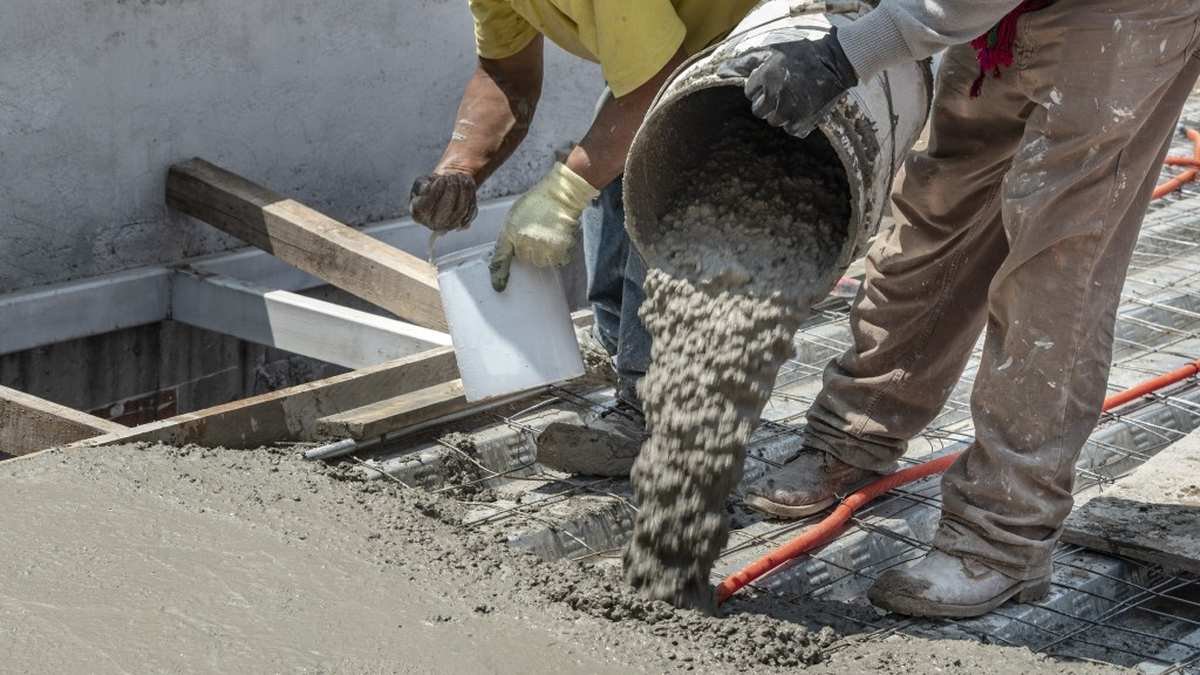
Order the Right Amount the First Time
Nothing stalls a weekend project like a concrete truck arriving with too little — or paying for a mountain of gravel you now have to give away. Suppliers sell bulk material by the cubic yard, and guessing the number almost always ends in one of those two outcomes.
This free cubic yard calculator turns your measurements into an exact order: length, width, and depth in — cubic yards, cubic feet, and even the estimated load weight in tons out. It handles rectangular beds and driveways as well as round planters and fire pits, and it can add the contractor-standard 10% waste allowance automatically.
How this was calculated
Weights are estimates from typical bulk densities and can vary with moisture and compaction. Always confirm the per-yard weight with your supplier before a delivery.
How to Use This Calculator
- Pick your project shape. Choose Rectangle for patios, driveways, and garden beds, or Circle for round planters, fire pits, and tree rings.
- Enter the dimensions in feet. For a rectangle, type the length and width. For a circle, measure straight across (the diameter) — no need to halve it yourself.
- Enter the depth. Keep it in inches (the default) or switch to feet. Typical depths: 2–3 inches for mulch, 3–4 inches for gravel paths, 4–6 inches for a concrete slab.
- Choose a material (optional). Pick concrete, topsoil, mulch, gravel, or sand to get an estimated load weight in tons — handy for checking delivery limits and vehicle payloads.
- Decide on the waste allowance. The 10% extra is checked by default because almost every project needs it; uncheck it if your supplier already builds overage into their quotes.
- Click Calculate Cubic Yards. You get the yards to order, the cubic feet, the square footage covered, and — if you chose a material — the estimated tons, plus a full step-by-step breakdown.
What Is a Cubic Yard?
A cubic yard is a cube that measures 3 feet on every side — 3 × 3 × 3 — which works out to exactly 27 cubic feet. It is the standard unit that landscape yards, quarries, and ready-mix concrete plants use to sell bulk material. When a supplier asks “how many yards do you need?”, they mean cubic yards, not square yards or linear yards.
To picture one: imagine a washing machine-sized box filled to the brim with soil or gravel. Most full-size pickup trucks carry roughly 2–3 cubic yards per load (and often hit their weight limit before the bed looks full). A typical 10 × 10 foot patio at 4 inches thick needs about 1.23 cubic yards — just over one full “box.”
Because one cubic yard equals 27 cubic feet, the core conversion is simple: find your volume in cubic feet, then divide by 27. There is one shortcut worth knowing — if your depth is in inches, multiply square feet by depth in inches and divide by 324 (which is just 27 × 12). It gives the same answer in one step.
The Formula (With a Worked Example)
Depth in inches? Divide by 12 first — or use the shortcut: cubic yards = (square feet × depth in inches) ÷ 324.
For a circle: cubic yards = (π × (diameter ÷ 2)² × depth in feet) ÷ 27.
Worked example — a 10 ft × 10 ft × 4 in patio.
- Area: 10 × 10 = 100 square feet.
- Convert the depth: 4 inches ÷ 12 = 0.333 feet.
- Volume in cubic feet: 100 × 0.333 = 33.33 ft³.
- Convert to cubic yards: 33.33 ÷ 27 = 1.23 cubic yards.
- Add 10% for waste: 1.23 × 1.10 = 1.36 cubic yards — and since suppliers round up, you would order 1.5 yards.
That final rounding step matters: most yards sell in half-yard increments, so always round your answer up to the nearest half yard. The calculator does this for you in the results breakdown.
How Much Area Does One Cubic Yard Cover?
A quick way to sanity-check your answer: one cubic yard covers 324 square feet at 1 inch deep — divide 324 by your depth in inches for any other depth.
| Depth | Area one cubic yard covers | Common use |
|---|---|---|
| 2 in | 162 sq ft | Mulch top-up |
| 3 in | 108 sq ft | Garden beds, mulch |
| 4 in | 81 sq ft | Gravel paths, concrete slabs |
| 6 in | 54 sq ft | Driveway base, thick slabs |
| 12 in | 27 sq ft | Raised beds, deep fill |
How Much Does a Yard of Material Weigh?
Volume tells you what to order; weight tells you whether it can get there. Bulk densities vary a lot between materials — and moisture and compaction change them further — but these are the standard figures suppliers work with:
| Material | Typical weight per cubic yard | Good to know |
|---|---|---|
| Concrete | ~2.03 tons (about 4,050 lb) | A ready-mix truck carries 8–10 yards — over 16 tons. |
| Topsoil / fill dirt | ~1.08 tons (about 2,160 lb) | Wet soil can weigh noticeably more. |
| Gravel / crushed stone | ~1.4 tons (about 2,800 lb) | Dense stone hits pickup payload limits fast. |
| Sand | ~1.35 tons (about 2,700 lb) | Wet sand compacts and gains weight quickly. |
| Mulch / bark | ~0.35 tons (about 700 lb) | Light and bulky — volume, not weight, is the limit. |
That 10 × 10 patio from the example? At 1.36 yards with waste, concrete would weigh roughly 2.75 tons — well beyond any pickup, so a ready-mix delivery is the right call. The same volume in mulch weighs under half a ton and fits in a single trailer load. Choosing your material in the calculator above adds this weight estimate to your results automatically.
Tips for Ordering Materials
- Always round up, never down. Suppliers sell in half- or full-yard increments. Rounding up to the nearest half yard costs a little; running short costs a second delivery fee.
- Keep the 10% waste allowance. Settling, spillage, uneven ground, and forms that bow outward all eat into your volume. Contractors add 10% as standard practice (5% for concrete in tight forms).
- Measure twice, in feet. The single most common error is entering a depth in inches as if it were feet — that makes the answer 12 times too large. Enter inches in the inches field and let the calculator convert.
- Account for compaction. Loose gravel and soil compact 10–20% once raked and tamped. If your project needs a finished depth of 4 inches, plan for it to settle and order accordingly.
- Confirm minimums and fees. Many ready-mix plants charge a short-load fee under a minimum (often 3–4 yards); landscape yards may have delivery minimums too. It can be cheaper to combine projects.
- Tell the supplier your project. “A 10 × 10 patio, 4 inches thick” lets them double-check your number — a free second opinion from people who do this all day.
- Check access before delivery day. A concrete truck needs a clear, firm path; a dump trailer needs overhead clearance. Confirm weights against your driveway’s capacity.
How Many Bags and Wheelbarrow Loads Make a Cubic Yard?
Not every job justifies a delivery truck. For small projects the cubic yard still rules the math — you just buy it in pieces:
| Retail unit | Units in 1 cubic yard |
|---|---|
| Bag of mulch or soil, 2 cu ft | 13.5 bags |
| Bag of topsoil, 0.75 cu ft (typical 40 lb bag) | 36 bags |
| Bag of concrete mix, 0.6 cu ft yield (80 lb) | 45 bags |
| Wheelbarrow, standard 3 cu ft | 9 loads |
| Wheelbarrow, small 2 cu ft | 13-14 loads |
The bag row is also a price check: 13.5 bags of mulch at $4 each is $54, which is why bulk yards at $30-45 usually win beyond a single yard — and why bags still win for a half-yard job with no delivery fee.
More Construction Tools
Frequently Asked Questions
How do I calculate cubic yards?
Multiply length × width × depth in feet, then divide by 27. If your depth is in inches, divide it by 12 first — or multiply square feet × depth in inches and divide by 324.
How many cubic feet are in a cubic yard?
Exactly 27. A cubic yard is a 3 × 3 × 3 foot cube, so 3 × 3 × 3 = 27 cubic feet.
How many cubic yards do I need for a 10×10 slab at 4 inches thick?
About 1.23 cubic yards before waste. With the standard 10% waste allowance that becomes 1.36 yards, so you would order 1.5 cubic yards from the supplier.
Should I add extra for waste?
Yes — 10% is the contractor standard for soil, mulch, gravel, and sand, covering settling, spillage, and uneven ground. For concrete in well-built forms, 5% is usually enough. The calculator above can add the 10% automatically.
How much does a cubic yard of concrete weigh?
About 2.03 tons (roughly 4,050 lb). Topsoil is around 1.08 tons per yard, gravel about 1.4 tons, sand about 1.35 tons, and mulch only about 0.35 tons.
How many yards of gravel fit in a pickup truck?
Most full-size pickups can physically hold 2–3 cubic yards, but weight is the real limit: 2 yards of gravel weighs about 2.8 tons, far beyond a typical 1,000–1,500 lb payload rating. For anything over about half a yard of stone or concrete material, get it delivered.
What is the difference between a cubic yard and a square yard?
A square yard measures area (3 ft × 3 ft = 9 square feet) — useful for sod or fabric. A cubic yard measures volume (3 ft × 3 ft × 3 ft = 27 cubic feet) — what bulk materials are sold by. They are not interchangeable.
Do suppliers sell fractions of a cubic yard?
Usually in half-yard increments at minimum, and many ready-mix plants have a 3–4 yard minimum before short-load fees kick in. Always round your calculated amount up to the nearest half yard.
How many bags of mulch or soil make a cubic yard?
It depends on the bag size, since a cubic yard is 27 cubic feet. Bags of 2 cubic feet: 27 ÷ 2 = 13.5, so 14 bags. Bags of 1.5 cubic feet: 18 bags. The common 40 lb topsoil bag holds about 0.75 cubic feet, so 27 ÷ 0.75 = 36 bags. Check the cubic-foot figure printed on the bag — weight alone does not tell you the volume.
How many wheelbarrow loads are in a cubic yard?
About 9 loads with a standard 3 cubic foot wheelbarrow (27 ÷ 3), or 13-14 with a small 2 cubic foot barrow. Heaped loads carry more, but for heavy materials like gravel and wet soil, level loads are the safer planning figure — a heaped 3 cu ft barrow of gravel weighs over 300 lb.
Related Calculators