Daily water intake needs based on weight, activity, and climate.

How to Use the Hydration Calculator
The old ‘eight glasses a day’ rule ignores your body size, climate, and activity — a marathon runner in Phoenix needs far more water than an office worker in Seattle. This calculator personalizes your daily fluid target.
- Enter your body weight and select your activity level (sedentary to very active).
- Select your climate — heat and humidity raise sweat losses substantially.
- Add exercise minutes if you train; the tool adds roughly 12 oz per 30 minutes of activity.
- See your personalized daily water target in ounces and liters, plus signs you are under-hydrated.
Hydration Formula
The practical baseline endorsed by many dietitians: drink half your body weight in ounces daily. A 160-pound person targets 80 ounces (about 2.4 liters). The more physiological formula used in clinical settings is 30–35 milliliters per kilogram of body weight — a 75 kg adult needs 2.25–2.6 liters at rest. Both are starting points, not prescriptions.
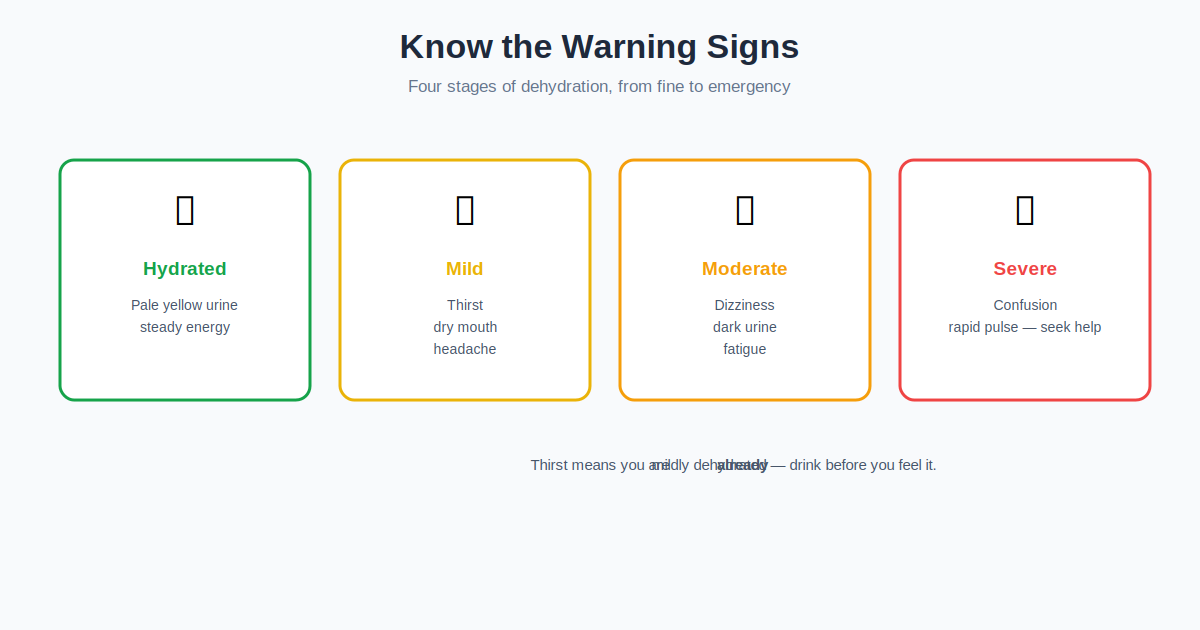
Adjustments matter more than the baseline. Exercise adds roughly 0.4–0.8 liters per hour depending on intensity and heat. Hot climates can double sweat rates versus temperate ones. High-sodium meals, alcohol, caffeine, illness, pregnancy, and breastfeeding all raise needs, while water-rich foods (fruits, vegetables, soups) supply 20–30% of daily fluid for most people — which is why ‘drink’ targets overstate what must come from the glass. The best gauge is free and built in: pale-yellow urine means you are hydrated; dark yellow means drink more.
Daily Water Intake by Body Weight
Multiply your weight in kilograms by 35 milliliters — the baseline this calculator uses — to find your starting target before activity and climate adjustments:
| Body weight | Baseline intake | 250 ml glasses |
|---|---|---|
| 50 kg (110 lb) | 1.75 L | 7 |
| 60 kg (132 lb) | 2.1 L | ~8½ |
| 70 kg (154 lb) | 2.45 L | ~10 |
| 80 kg (176 lb) | 2.8 L | ~11 |
| 90 kg (198 lb) | 3.15 L | ~12½ |
| 100 kg (220 lb) | 3.5 L | 14 |
This is a baseline for total fluids, not plain water alone. Exercise, hot weather, and health conditions move the target — and the calculator above adds those for you.
Example Calculation
Sofia weighs 140 pounds and runs 45 minutes daily in a warm climate. Baseline: 140 ÷ 2 = 70 ounces. Exercise adds about 18 ounces (12 oz per 30 minutes × 1.5), and the warm climate adds roughly 10% — 7 more ounces. Target: about 95 ounces, or 2.8 liters per day from all fluids. Since her diet includes plenty of fruit and vegetables contributing ~20 ounces of water, she needs roughly 75 ounces from drinks — about nine 8-ounce glasses, comfortably above the generic eight-glass rule that would have underestimated her active lifestyle.
When You Need More — or Less
Exercise. Drink roughly 350 ml (12 oz) for every 30 minutes of moderate-to-vigorous exercise, on top of your baseline, and keep sipping afterward as you replace what you lost. Long sessions in heat can need more than twice that.
Hot weather. Sweat rates in heat can double versus temperate conditions. Adding an extra 500 ml to 1 liter on hot days is a reasonable starting point.
Pregnancy and breastfeeding. The US National Academies set adequate total-water intakes of 3.0 liters a day in pregnancy and 3.8 liters while breastfeeding, versus 2.7 liters for other adult women — roughly 0.3 and 0.7–1 liter above the usual baseline.
Illness and fever. Fever, vomiting, and diarrhea all raise fluid needs; sip oral rehydration drinks rather than plain water when losses are heavy.
When less is needed. More water is not always better: drinking far beyond need can dilute blood sodium (hyponatremia). And some conditions — heart failure, advanced kidney disease — require fluid restriction. If a doctor has told you to limit fluids, follow their number, not this calculator’s.
Easy Ways to Hit Your Daily Target
Knowing your number is half the battle; spreading it across the day is the other half. Start the morning with a full glass, keep water within reach at your desk, and drink a glass with each meal — that alone covers most people. Reusable bottles with time markers make progress visible, and flavoring water with lemon or cucumber helps if plain water bores you. Front-load on workout days: a glass an hour before exercise and steady sips during it beat trying to catch up afterward.
Frequently Asked Questions
Is the 8-glasses-a-day rule accurate?
It is a reasonable average that happens to fit a sedentary 120–150 pound adult in a temperate climate. Larger, active, or hot-climate people need more; smaller sedentary people need less. Personalized beats one-size-fits-all.
Does coffee dehydrate you?
Mildly, but not enough to cancel itself out. Coffee is still a net hydrator — the water in it exceeds the small diuretic effect. Only very high caffeine doses in unaccustomed drinkers meaningfully increase fluid loss.
Can you drink too much water?
Yes — overhydration (hyponatremia) dilutes blood sodium and can be dangerous, mostly seen in endurance athletes who drink far beyond thirst. For most people, drinking to thirst plus watching urine color is the safe strategy.
Do foods count toward hydration?
Absolutely. Cucumbers, watermelon, oranges, and soups are 85–95% water, and the average diet supplies 20–30% of daily fluid. Big salad eaters need less from the tap than fast-food eaters.
What are the first signs of dehydration?
Thirst (already ~1–2% dehydrated), darker urine, headache, fatigue, and trouble concentrating. Athletic performance drops measurably at just 2% fluid loss — well before you feel seriously thirsty.
How much extra water do I need when I exercise?
Plan for about 350 ml (12 ounces) per 30 minutes of moderate-to-vigorous exercise, added to your daily baseline. That is the rate the calculator applies per exercise minute. For sessions longer than an hour or in real heat, you may need twice as much — and keep drinking after you finish, since rehydration continues for hours.
Does sparkling water count toward my daily intake?
Yes. Plain, sparkling, and mineral water hydrate equally well, as do unsweetened tea, milk, and juice. About 20–30% of most people’s daily fluid actually comes from food — fruits, vegetables, soups, and yogurt — which is why total-fluid targets look higher than what you need to drink. What does not hydrate: alcohol, which raises your needs instead of lowering them.
Related Calculators
Try our BMI Calculator and Calorie Calculator for more calculations.