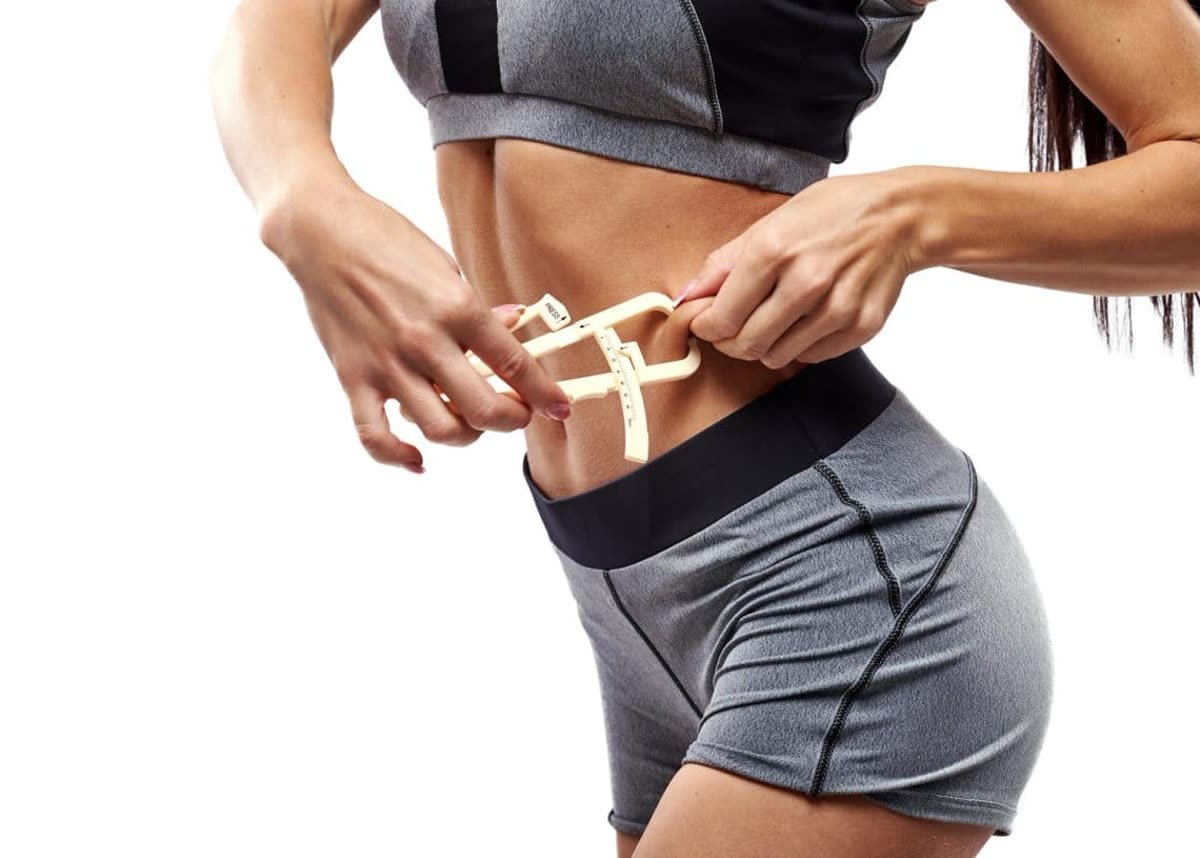
The scale tells you how much you weigh — never what it’s made of
Two people can weigh exactly the same and look completely different, because one carries more muscle and the other carries more fat. Body fat percentage closes that gap: it splits your total weight into fat mass and everything else (muscle, bone, organs, water), giving you the honest version of your fitness story.
This free calculator uses the U.S. Navy tape-measure method, the same circumference formula the military has relied on for decades. All you need is a soft measuring tape, your height, and two or three quick measurements — enter your numbers below and get your estimated body fat percentage in seconds, along with your category and a fat-mass/lean-mass breakdown.
cm
cm
cm
cm
kg
Uses the U.S. Navy circumference method (Hodgdon–Beckett). An estimate for tracking trends — not a medical body-composition assessment. Measure with a soft tape, first thing in the morning, and re-measure every 2–4 weeks.
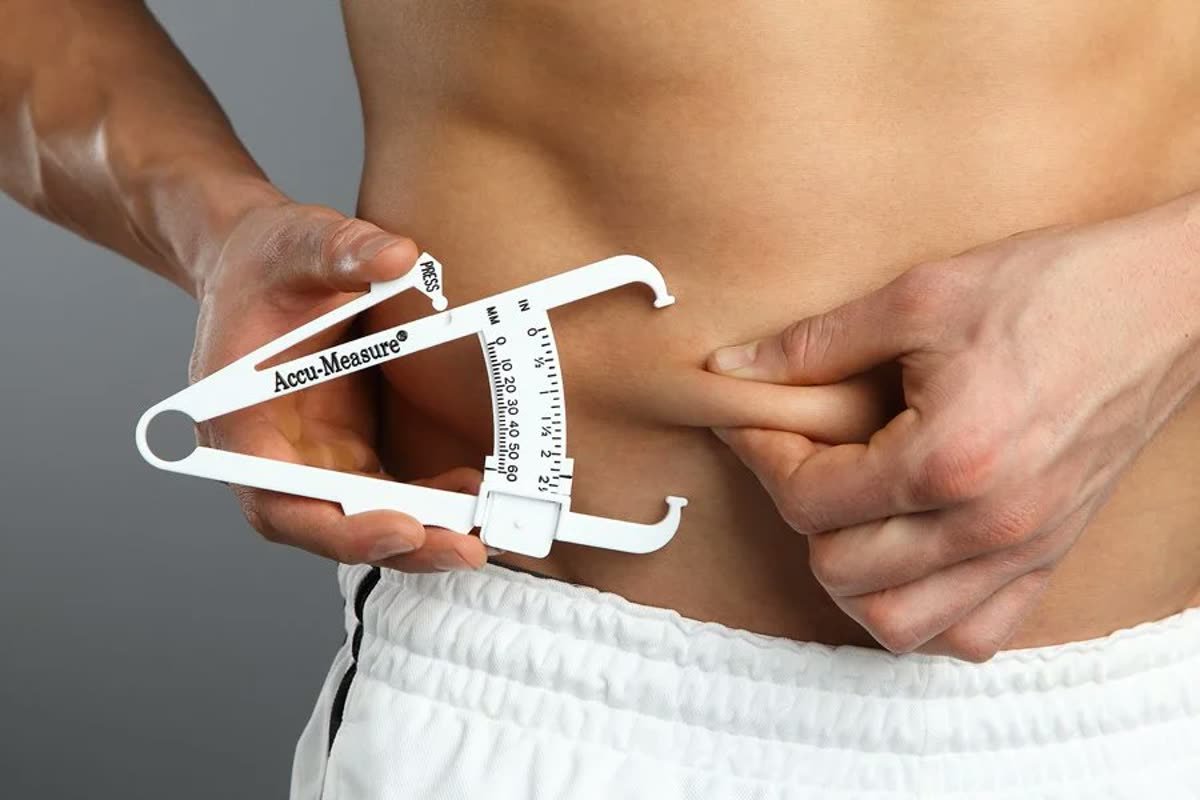
How to Use the Body Fat Percentage Calculator
- Pick your gender. Men and women store fat differently, so the formula uses different equations for each. Selecting “Female” reveals an extra field for hip measurement.
- Choose your units. Toggle between centimeters and inches — switching converts whatever you’ve already typed, so nothing resets.
- Enter your height. Measure barefoot, back against a wall, from the floor to the top of your head.
- Measure your neck. Wrap the tape just below the Adam’s apple, keep it level, and hold it snug without pressing into the skin.
- Measure your waist. Men measure at the navel; women measure at the narrowest point of the torso. Stand relaxed after a normal exhale — don’t suck in.
- Measure your hips (women). Feet together, tape around the widest part of the buttocks.
- Add your weight (optional). Enter it and you’ll also see your fat mass and lean mass.
- Hit “Calculate Body Fat %.” Your result updates live as you type.
What Is Body Fat Percentage?
Body fat percentage is the share of your total body weight that is fat tissue. If you weigh 80 kg and your body fat percentage is 20%, you carry 16 kg of fat and 64 kg of lean mass. That’s why this number beats the scale — and even beats BMI — for most people: it rewards muscle gain and penalizes fat gain separately, which is exactly what your training and diet are trying to do.
Body fat itself isn’t the enemy. Essential fat — around 2–5% for men and 10–13% for women — is the minimum your body needs for hormones, organ cushioning, and basic physiology. Everything above that is storage fat, your energy reserve. The goal is never zero fat; it’s keeping storage fat in a range that supports health, energy, and performance.
The U.S. Navy Formula (With a Worked Example)
Women: BF% = 163.205 × log₁₀(waist + hip − neck) − 97.684 × log₁₀(height) − 78.387
These equations were developed by Hodgdon and Beckett at the Naval Health Research Center — the standard tape-measure method since 1984. The logarithmic terms model how body fat actually distributes (fat doesn’t add up in straight lines), which is why this method tracks lab results (DEXA scans) within about 3–4 percentage points for most adults.
Worked example (man): Height 180 cm, neck 40 cm, waist 90 cm. Convert to inches: 70.87, 15.75, 35.43. Waist − neck = 19.68 in → 86.010 × log₁₀(19.68) = 111.30. Height → 70.041 × log₁₀(70.87) = 129.61. BF% = 111.30 − 129.61 + 36.76 = 18.5% — squarely in the Average range for men.
Healthy Body Fat Ranges
The most widely used reference bands come from the American Council on Exercise (ACE):
| Category | Men | Women |
|---|---|---|
| Essential fat | 2–5% | 10–13% |
| Athletes | 6–13% | 14–20% |
| Fitness | 14–17% | 21–24% |
| Average | 18–24% | 25–31% |
| Obese | 25%+ | 32%+ |
Notice how wide the healthy window is: 14–24% for men and 21–31% for women. A man at 20% and a man at 14% are both in fine shape — the difference is lifestyle and goals, not a pass/fail grade. And age shifts the picture a little: body fat naturally creeps up a few points between your twenties and fifties, which is normal.
Limitations of the Navy Method
The tape-measure method is excellent for tracking trends, but honest use means knowing its edges:
- It’s an estimate, ±3–4 points. Even with careful measuring, it sits a few percentage points from lab methods like DEXA. Trust the trend over weeks, not any single reading.
- Small errors magnify. A centimeter of tape error at the waist can shift your result noticeably — measure twice and average.
- Not for everyone. The formula is calibrated for adults. It is less reliable for children, pregnant women, competitive bodybuilders at very low body fat, and people with significant swelling or conditions affecting body shape.
- It doesn’t see where fat sits. Two people at 20% can have different health profiles depending on how much fat is visceral (around the organs) — waist trends still matter.
If a health decision depends on the number, get a DEXA scan or a clinician’s assessment rather than relying on a tape alone.
Tips for Accurate Results and Healthy Progress
- Measure first thing in the morning, before eating or training, wearing minimal clothing. Bloating, meals, and workouts shift your waist by a centimeter or two.
- Use a soft fabric or fiberglass tape — never a metal construction tape, which won’t sit flat on your body.
- Keep the tape level and snug, not tight. It should touch the skin all the way around without compressing it.
- Measure the same way every time. Same spots, same time of day, same tape tension — consistency is what makes the trend trustworthy.
- Re-measure every 2–4 weeks, not daily. Body fat changes slowly; daily checks only add noise.
- Protect your muscle while losing fat. A moderate calorie deficit, plenty of protein, and resistance training keep most of the loss coming from fat rather than muscle.
- Don’t chase the athlete zone. Single-digit body fat demands weighed food and constant vigilance — the Fitness and Average bands are where health lives for most of us.
Related Tools
How to Take Your Measurements Correctly
The Navy formula is only as good as the numbers you feed it — most bad results trace back to the tape, not the math:
- When: first thing in the morning, after the bathroom, before eating or training, on bare skin or one thin layer.
- Neck: just below the Adam’s apple for men; the smallest circumference for women. Tape level, snug, not pressing in.
- Waist: at navel level for men; at the narrowest point of the torso for women. Stand relaxed, measure after a normal exhale — never suck in.
- Hips (women): feet together, tape around the widest part of the buttocks.
- Average of two: measure every site twice; if readings differ by more than half an inch, take a third and average.
Why so fussy? For a man 5 ft 10 in tall with a 15-inch neck, a 34-inch waist gives 17.5% body fat — a 34.5-inch waist gives 18.5%. Half an inch of tape slack is a full percentage point.