Estimate DIY vs professional moving costs. Enter distance, home size, and move details to compare truck rental against full-service movers.
Compare doing it yourself against hiring professional movers.
How to Use the Moving Cost Calculator
Moving costs swing wildly based on distance, home size, and how much work you do yourself. This calculator estimates both paths — renting a truck versus hiring professionals — so you can make the tradeoff with real numbers.
- Enter the distance. Use the driving miles between your old and new address.
- Pick your home size. Bigger homes mean more stuff, bigger trucks, and more labor hours.
- Choose DIY or professional. DIY means you rent the truck and do the loading. Professional means a crew handles everything.
- Add packing help if needed. Full packing service typically adds about 40 percent to the base cost.
How Moving Costs Are Estimated
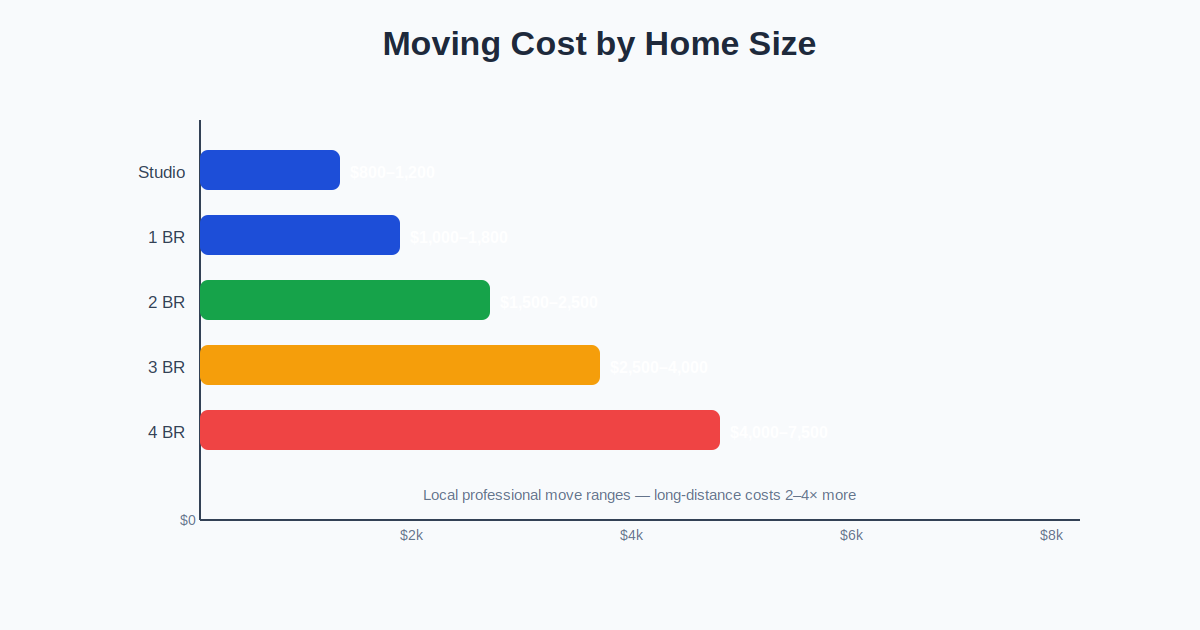
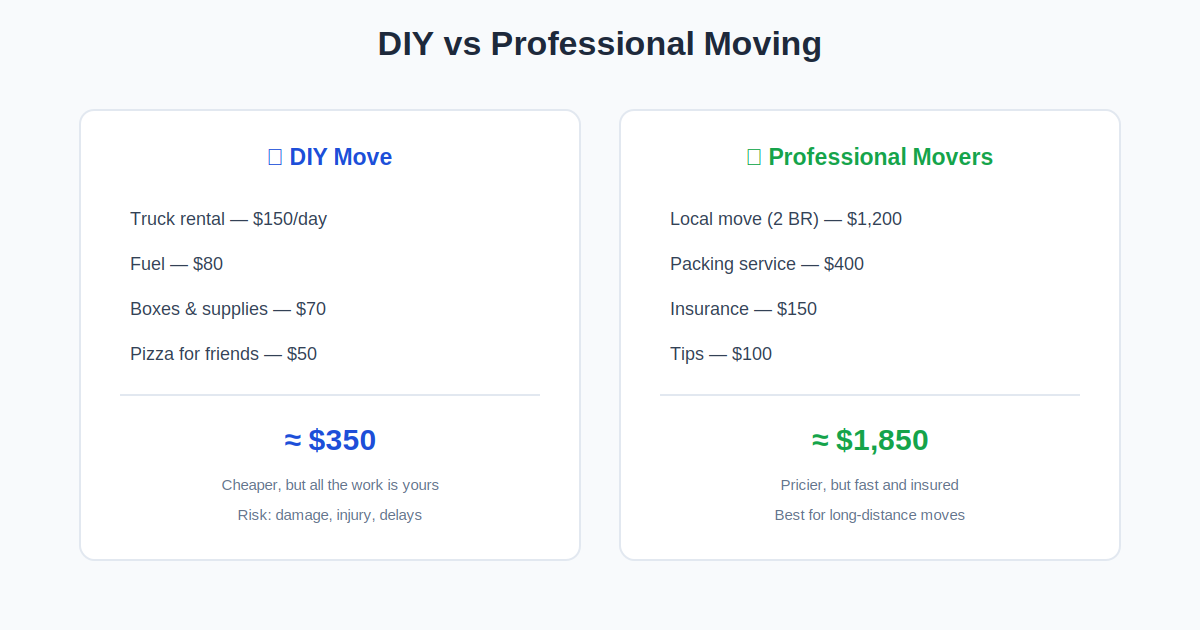
Professional movers generally charge by weight and distance for long moves, or hourly for local ones. A useful rule of thumb: local moves run 300 to 1,500 dollars depending on home size, while long-distance moves average 2,500 to 7,000 dollars. DIY truck rental looks cheaper — 400 to 1,500 dollars base — but add fuel, mileage fees, insurance, and your own labor, plus the very real cost of a sore back and a scratched sofa.
The calculator uses base rates per home size plus a per-mile factor (about 1.20 dollars per mile DIY for fuel and mileage fees, about 3.50 dollars per mile for professional weight-based pricing). The range shown (85 to 120 percent of estimate) reflects real-world variance from stairs, elevators, bulky items like pianos, and seasonal demand — summer moves cost noticeably more.
Worked Example
A 2-bedroom apartment moving 500 miles with professional movers: base 2,500 dollars + distance 500 x 3.50 = 1,750 dollars, total 4,250 dollars, with a typical range of 3,613 to 5,100 dollars. The same move DIY: base 700 + 500 x 1.20 = 600, total 1,300 dollars. The 2,950 dollar gap is the price of other people carrying your couch. Select these options above to verify.
Two Ways Movers Price a Job
Professional quotes follow one of two models, and knowing which one applies explains most of the spread between estimates. Local moves (under roughly 50 miles) are billed by time: a crew rate per hour multiplied by the hours worked, usually with a minimum. Labor-only help runs about $45 to $75 per mover per hour, and a full-service crew with a truck commonly totals $100 to $200 per hour. Long-distance moves are billed by weight and distance instead — typically $0.70 to $1.00 per pound. A one-bedroom apartment usually weighs 2,000 to 3,000 pounds, so at $0.80 per pound its transport alone runs $1,600 to $2,400 before packing or insurance. This calculator mirrors the same drivers — a base rate per home size plus a per-mile factor — so you can cross-check any quote against it: a professional quote far above the range here should come with a clear explanation.
Ways to Bring the Cost Down
The biggest lever on a long-distance move is weight itself. At $0.70 to $1.00 per pound, selling, donating, or giving away 1,000 pounds of furniture and books takes roughly $700 to $1,000 off the transport charge — often more than any discount a mover offers. Timing is the second lever: mid-week and mid-month moves outside the summer peak commonly price 20 to 30 percent lower than summer weekends. Third, pack yourself if you can; full packing service adds about 40 percent to a professional move in this calculator's model, which matches typical industry pricing. Finally, get at least three written quotes, ask what each one excludes (stairs, long carries, storage, valuation coverage), and book early — the cheapest crews fill their calendars first.
Frequently Asked Questions
How much does it cost to hire movers?
Local moves average 300 to 1,500 dollars; long-distance moves average 2,500 to 7,000 dollars depending on home size and mileage. Get at least three quotes.
Is DIY moving really cheaper?
Usually yes on paper, but factor in truck fees, fuel, insurance, packing supplies, time off work, and injury risk. For long distances, the gap narrows.
When is the cheapest time to move?
Mid-month, mid-week, and off-season (October through April). Summer weekends are peak pricing — sometimes 20-30 percent higher.
What hidden moving costs should I expect?
Stair fees, long-carry fees, packing materials, insurance upgrades, storage, utility deposits, and cleaning costs at both ends.
Should I buy moving insurance?
Basic coverage (60 cents per pound) is nearly worthless for valuables. Full-value protection costs more but actually replaces damaged items.
How much do movers charge per hour for a local move?
Local moves are billed by the hour. Labor-only help typically runs $45 to $75 per mover per hour, while a full-service crew with a truck commonly totals $100 to $200 per hour depending on crew size and city, usually with a 2 to 4 hour minimum. A third mover raises the hourly rate but can lower the total by finishing the job faster.
Related Calculators
Budgeting the whole relocation? Check what you can afford at the new place with the Home Affordability Calculator, and use the Prorated Rent Calculator if you are moving in or out mid-month.