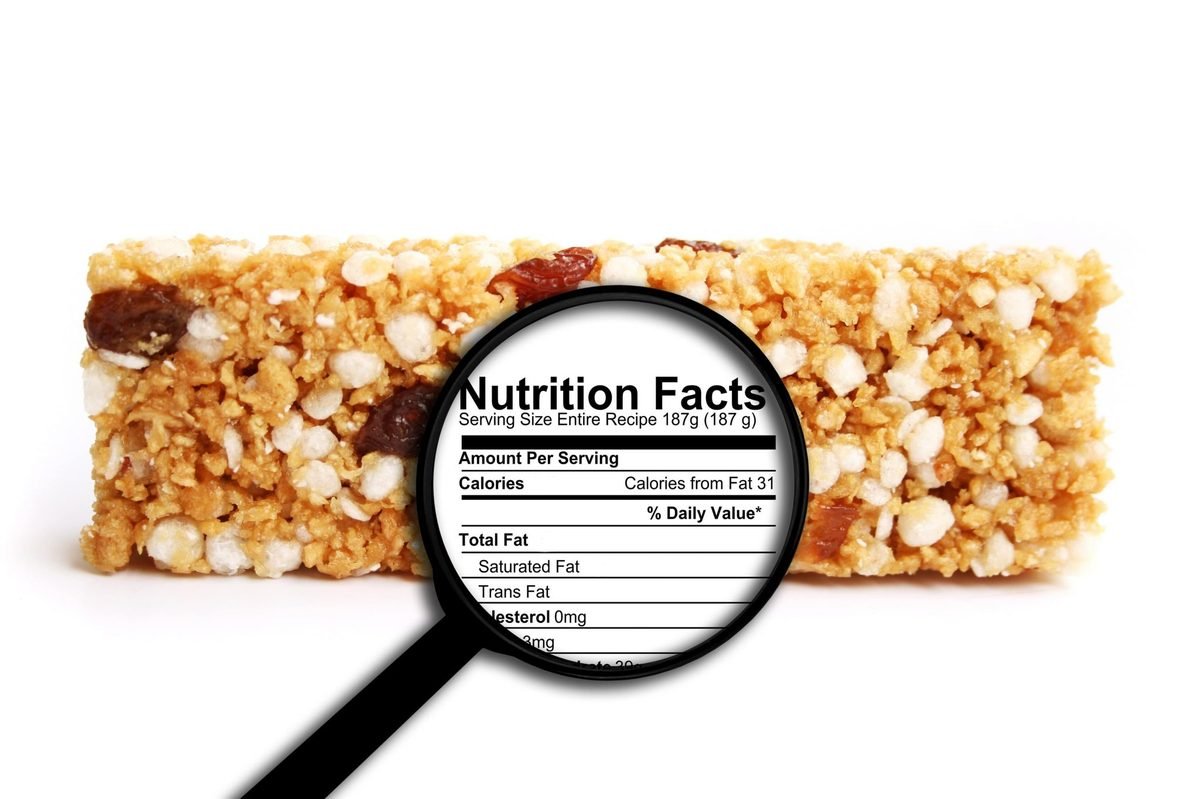
Reading a Food Label in kJ? Translate It to Calories Instantly.
You pick up a snack, flip it over, and the label says 850 kJ. Is that a lot? If you think in calories — like most people in the US, Canada, and much of Asia — that number means nothing until it is converted. Meanwhile, travelers in Australia, New Zealand, and Europe face the mirror problem: labels speak kilojoules while their fitness app asks for calories. This free converter works in both directions: kJ to calories and calories to kJ, with one tap to switch.
The short answer: divide kilojoules by 4.184 to get calories, and multiply calories by 4.184 to get kilojoules. Both units measure exactly the same thing — energy — so the conversion is precise, with no rounding debates. Below, the tool does the math for you, shows everyday food examples in both units, and teaches the divide-by-4 mental shortcut for the supermarket aisle.
How to Use the Kilojoules to Calories Converter
- Choose the direction. Tap "kJ → kcal" to convert a kilojoule number into calories, or "kcal → kJ" to go the other way.
- Enter the value. Type the energy number from the food label, recipe, or fitness app.
- Tap Convert. The exact converted value appears at the top, with the rounded figure and a rule-of-thumb check beside it.
- Compare with real foods. The built-in table shows familiar foods in both units, so you can sense-check any label instantly.
What Are Kilojoules and Calories?
A kilojoule (kJ) is the metric unit of energy — one thousand joules, the SI unit named after physicist James Prescott Joule. It is the standard energy unit on food labels in Australia, New Zealand, and most of Europe. A calorie, in the food sense, is actually a kilocalorie (kcal): the energy needed to raise one kilogram of water by one degree Celsius. On packaging, "Calories" with a capital C always means kilocalories — 1 food Calorie = 1 kcal = 1,000 small physics calories.
The bridge between them is fixed by definition: 1 kcal = 4.184 kJ. Neither unit is "more correct" — they are simply two languages for the same energy. The confusion is purely regional habit, which is why a two-way converter matters: it lets a kJ-label reader log calories in their app, and a calorie counter read a European recipe, without any mental gymnastics.
The Conversion Formulas (With Worked Examples)
Calories to kilojoules: kJ = kcal × 4.184
Worked example 1: A snack bar lists 100 kJ. How many calories is that?
- 100 ÷ 4.184 = 23.90 kcal
Worked example 2: Your lunch was 500 kcal. What is that in kilojoules?
- 500 × 4.184 = 2,092 kJ
Worked example 3: A 2,000-calorie daily diet in kilojoules:
- 2,000 × 4.184 = 8,368 kJ
And for the aisle, remember the mental shortcut: divide kJ by 4 for a quick calorie estimate (800 kJ ≈ 200 kcal; the exact answer is 191.2). It runs about 4% high, which is close enough for shopping decisions.
Quick Conversion Table: kJ to Calories
| Kilojoules (kJ) | Calories (kcal) | Roughly equals |
|---|---|---|
| 100 | 23.9 | A small apple |
| 250 | 59.8 | A slice of toast with jam |
| 500 | 119.5 | A medium banana and a yogurt |
| 1,000 | 239.0 | A modest sandwich |
| 2,000 | 478.0 | A filling restaurant meal |
| 8,700 | 2,079.4 | Average adult daily intake (AU label reference) |
Conversions use 1 kcal = 4.184 kJ, rounded to one decimal. Food comparisons are approximate.
Reading the Label: Per Serve vs Per 100 g
Australian and European labels list energy in two columns, and mixing them up is the most common label-reading mistake. The per serve column shows what one portion contains; the per 100 g column shows a standardized amount for fair comparison between products.
Use per 100 g when comparing: it answers "which product is more energy-dense?" regardless of pack size. Use per serve when counting: multiply it by the number of serves you eat. A packet listing 400 kJ per 30 g serve with 120 g in the bag holds 4 serves — so eating the whole bag is 1,600 kJ, or about 382 kcal (1,600 ÷ 4.184).
The percentage of daily intake (%DI) column uses 8,700 kJ as its reference, so you can translate it directly: a snack marked 10% DI costs you about 870 kJ of your day's budget. Once you read labels this way, the kJ-vs-calorie divide stops mattering — it is all the same energy, just counted in different units.
Limitations and Things to Watch
- Labels round aggressively. A label saying 850 kJ might be anywhere from 845 to 854 kJ before rounding — converted figures inherit that wobble, so do not over-interpret the second decimal.
- "Calorie" vs "calorie" confusion is real. The physics calorie (cal) is one-thousandth of the food Calorie (kcal). If a source mixes them up, your conversion will be off by a factor of 1,000 — always check the capital C.
- Food energy and exercise energy are estimated differently. Converting units is exact, but the underlying numbers — what a label claims, what your watch claims you burned — are both estimates with their own error.
- Serving sizes do the real tricking. A label might show 400 kJ "per 30 g serving" while the bag holds 120 g. Unit conversion will not save you from reading the serving size.
Tips for Fluent Energy Math
- Learn the divide-by-4 shortcut. In the store, 900 kJ ≈ 225 kcal (exact: 215). Fast, memorable, and within 5%.
- Anchor on 8,700 kJ. That is the Australian reference daily intake (≈ 2,079 kcal). If a snack is 1,740 kJ, it is one-fifth of a day — no calculator needed.
- Log in one unit consistently. Pick kcal or kJ for your food diary and convert everything once, rather than mixing units day to day.
- Check both sides of imported labels. Some products print kJ on one panel and kcal on another — the numbers should match within rounding; if they do not, trust the kJ figure and convert it yourself.
More Nutrition Tools
Frequently Asked Questions
What is the difference between kJ and kcal?
Nothing physical — they measure the same energy in different units. Kilojoules (kJ) are the metric/SI unit used on labels in Australia, New Zealand, and Europe; kilocalories (kcal, "food calories") are used in the US, Canada, and much of Asia. 1 kcal = 4.184 kJ, exactly.
How many kilojoules are in one calorie?
One food Calorie (1 kcal) equals 4.184 kilojoules. One small physics calorie (1 cal) equals 0.004184 kJ — a thousand times less, so make sure you know which "calorie" you mean.
Why do some countries use kilojoules instead of calories?
Because the joule is the SI unit of energy, and metric-system countries standardized food labeling on it. Australia made kJ mandatory on nutrition panels, and the EU followed the same logic. The US kept the older calorie convention.
Is 1 Calorie the same as 1 kcal?
Yes. On food labels, "Calories" with a capital C always means kilocalories (kcal). So 200 Calories = 200 kcal = 836.8 kJ. The capital letter is the giveaway.
What is the quickest way to convert kJ to calories in my head?
Divide by 4. An 800 kJ snack is about 200 calories (exact: 191.2 kcal). The shortcut runs roughly 4% high, which is fine for everyday decisions. To go the other way, multiply calories by 4.
Why does my food label only show kilojoules?
You are likely looking at a label from Australia, New Zealand, or Europe, where regulations require energy in kJ (sometimes with kcal alongside). Use the converter above to get the calorie number your tracking app expects.
How many kilojoules should I eat per day?
Australian labels use 8,700 kJ (about 2,079 kcal) as the average adult reference intake. Your personal needs vary with age, sex, size, and activity — a calorie calculator gives a better individual target than any label average.
What does 'per 100 g' mean on a food label?
It shows the energy for a standardized 100-gram portion so you can compare products fairly, regardless of pack size. The 'per serve' column shows what one portion actually contains — multiply it by the number of serves you eat to get the whole pack's energy.
Is a kilojoule bigger than a calorie?
No — the kilojoule is the smaller unit. One food calorie (kcal) contains 4.184 kilojoules, so 1 kJ ≈ 0.239 kcal. That is why kilojoule numbers on labels always look about four times bigger than calorie numbers for the same food.
Related Calculators